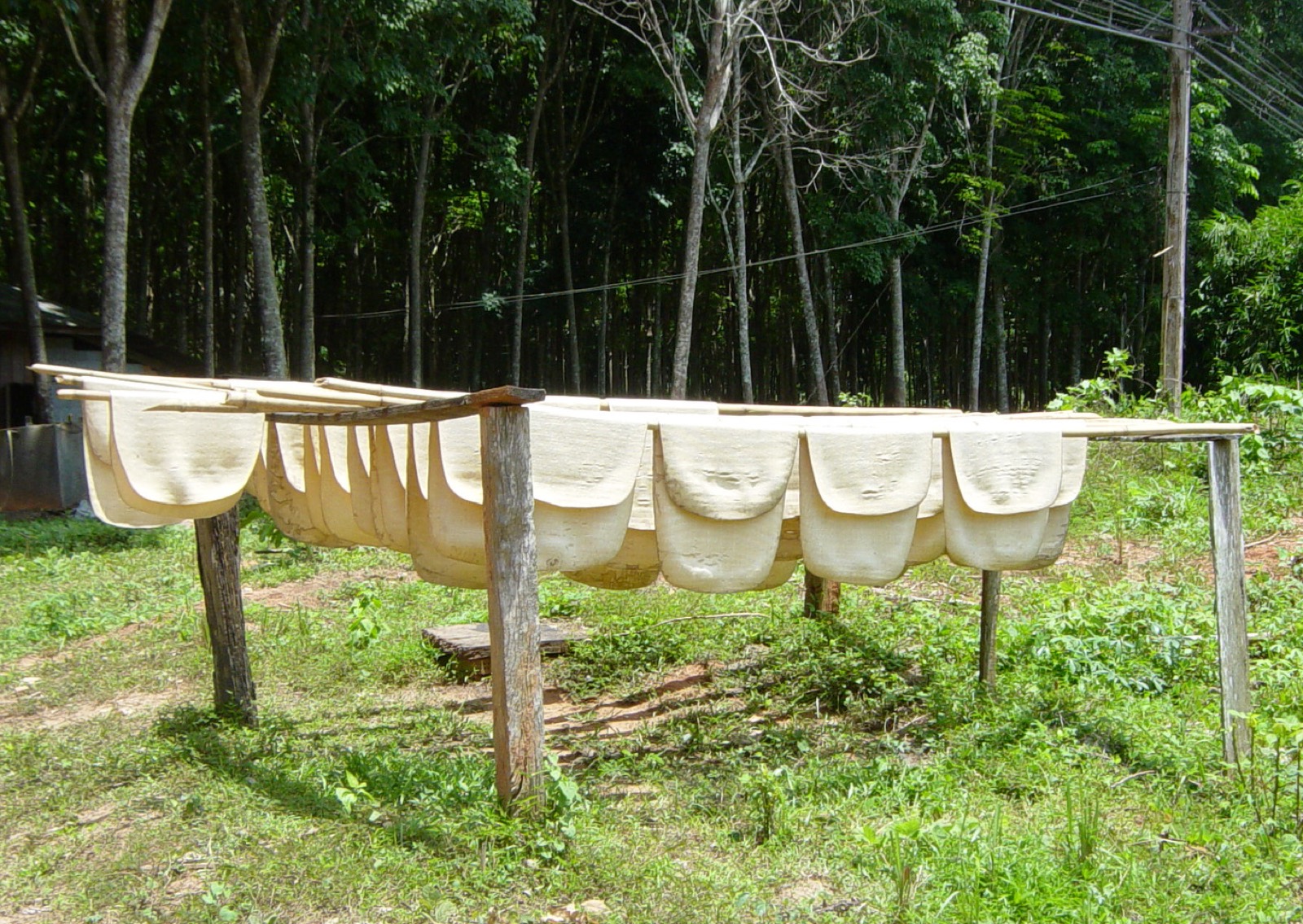
Natural rubber went into 2026 with a supply gap. Production is running near 14.9 million tonnes against demand above 15.6 million tonnes, and a market in deficit behaves differently from a market in surplus. Buyers who spent a decade squeezing suppliers on price start asking about allocation instead. If you produce or trade rubber, this is the year your commercial leverage is best, and most sellers will waste it talking to the same three customers they always talk to.
The 30-second version
- Global natural rubber exports were worth US$17.5 billion in 2025, up 8.6% on the year before.
- Thailand produces about 5.35 million tonnes, Indonesia about 2.04 million tonnes.
- Thailand, Indonesia and Vietnam together account for roughly 70% of world production.
- China consumes over 40% of global rubber and imports more than 80% of what it uses.
- Southeast Asia supplies about 65% of EU27 rubber imports, which is exactly the concentration EUDR is aimed at.
The concentration problem on both sides
Rubber is unusual in being concentrated at both ends. Three countries grow most of it. One country consumes over forty percent of it. Every other buyer in the market is negotiating in the shadow of Chinese demand, and every other seller is competing against Thai and Indonesian volume.
The American import split shows the pattern clearly: Thailand 24%, Indonesia 18%, Vietnam 15%, with the rest spread across West Africa and smaller Asian origins. Côte d'Ivoire has been the significant mover, climbing the producer table fast enough that it now sits alongside Vietnam in most rankings. For buyers looking to diversify away from Southeast Asia, West Africa is the only realistic answer at scale, and that shift is already underway.
EUDR is the biggest thing happening to this trade
Natural rubber is an EU Deforestation Regulation commodity. With Southeast Asia supplying roughly 65% of EU27 imports, the regulation lands squarely on the dominant supply route, and it demands plot-level geolocation and a due diligence statement rather than a certificate somebody can buy.
For smallholder-sourced rubber, which is most Thai and Indonesian production, that traceability is genuinely hard. The processors who have solved it are picking up European business from those who have not, and the differential is not small. Our EUDR compliance guide covers what the filing actually requires and when.
In a deficit market the question stops being what it costs and starts being whether you can get it. Sellers who can evidence origin get asked first.
Who the buyers actually are
Rubber importers split into three groups that want completely different things:
- Tyre manufacturers buy large, contracted volumes on tight technical specification, usually TSR grades, and qualify suppliers over months. High value, slow entry, very sticky once you are in.
- General rubber goods makers, producing seals, hoses, belts, footwear soles, buy smaller lots with more grade variety and switch suppliers far more readily. This is where a new exporter realistically starts.
- Traders and compounders buy opportunistically, hold stock and resell. They move fast and pay less, and they are a useful way to establish a lane before you chase the manufacturers on it.
You can tell them apart in shipment records without asking anybody: lot size, grade consistency and arrival cadence separate the three cleanly.
Where the 2026 opportunity sits
Three openings. European buyers are re-qualifying suppliers because of EUDR, and that door does not open often. West African origin is being actively sought by buyers who want to reduce Southeast Asian concentration, which favours anyone with Ivorian, Ghanaian or Liberian supply. And the deficit itself means mid-size manufacturers who were previously price-only buyers are now willing to pay for security of supply, which is the first time in years that a smaller supplier can win on reliability rather than on being cheapest.
India is worth watching on both sides, as a producer of scale and as a growing consumer with a large tyre industry. If you also handle synthetic or compounded material, the chemicals trade data guide covers the adjacent buyer base.
Grades, and why TSR20 runs the market
Natural rubber trades as technically specified rubber and as sheet, and the distinction decides your customer list. TSR20 is the volume grade, the one tyre manufacturers consume, specified on dirt content, ash, nitrogen and plasticity rather than on visual appearance. It is the benchmark the futures market quotes and the grade where the tonnage sits.
Ribbed smoked sheet is graded visually and commands a premium for general rubber goods, adhesives and specific technical uses. Latex concentrate is a separate trade entirely, moving in tanks rather than bales, with different buyers, different logistics and much tighter handling requirements.
The mistake worth avoiding is treating the specification as a formality. A consignment that misses on plasticity retention or dirt content is not discounted, it is rejected, because it will not run on the buyer's line. Consistency across shipments matters more to a tyre maker than being slightly better on any single one, and suppliers who understand that get requalified year after year.
How ShipScout helps
Production statistics tell you Thailand grew 5.35 million tonnes. They do not tell you which European or Indian factory is short this quarter. ShipScout does, with 11B+ shipment records across 240+ countries:
- Find rubber importers by market and grade, ranked by volume, with ports and cadence.
- See which origins each buyer relies on, and spot the ones actively adding a new one.
- Track West African origin growth lane by lane, so you know where diversification is real rather than announced.
- Pull decision-maker contacts where available and lead with the buyer's own import history.
Start a free trial and pull the buyer list for your grades.
See who’s importing natural rubber right now.
ShipScout turns 11B+ shipment records across 240+ countries into a live list of verified buyers and suppliers, ranked by volume, with the contacts to reach them. Create a free account and run your first search in minutes.
Start your free trial →