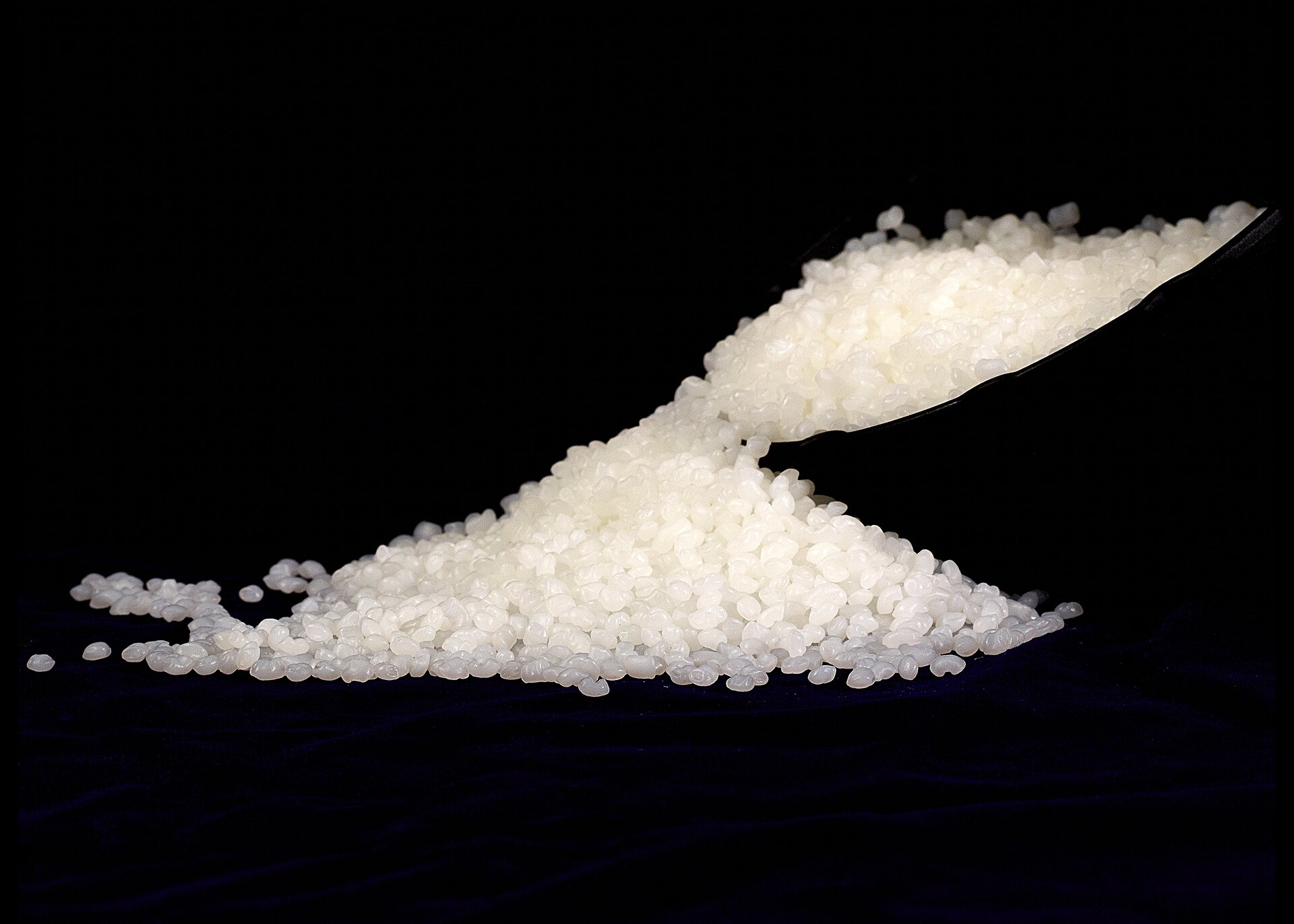
If you sell polymer and your biggest customer is still in China, you are working a market that shrank underneath you. Between 2020 and 2025 China cut polypropylene imports roughly in half and raised its exports by around 600%. The single largest buyer in the resin trade turned into a competitor. That is not a cycle, it is a structural reset, and the exporters who have adjusted are the ones who went looking for the demand that replaced it.
The 30-second version
- China's polypropylene imports fell from about 6.8 million tonnes in 2020 to roughly 3.7 million tonnes in 2025.
- As a share of world PP imports that is a drop from about 20% to 11%.
- China is still the largest polyethylene importer by value, at roughly US$16.4 billion in 2025.
- Asia Pacific holds 50.7% of the global polyethylene market, so the region matters, just not the country you assumed.
- The global plastic granules market was about US$52.4 billion in 2025, growing near 5.3% a year.
What actually changed
China spent a decade building propylene and polypropylene capacity, and that capacity came online. Domestic supply displaced imports, then started looking for export markets. ICIS called it the end of an era for overseas suppliers, which is about right for anyone whose business model assumed Chinese import growth was permanent.
The polyethylene picture is different and worth separating. China remains the world's largest PE importer by value, around US$16.4 billion in 2025. So the story is not "China stopped buying polymer". It is "China stopped buying the polymer it learned to make". That distinction tells you exactly which grades still have a Chinese market and which do not.
Where the displaced demand went
Three destinations absorbed a meaningful part of it, and each behaves differently:
- Vietnam now ranks among the top polypropylene importers outright, driven by packaging and electronics assembly demand that keeps outrunning domestic resin capacity.
- Türkiye is consistently in the top tier of PP buyers, with a large converter base and a habit of buying from many origins at once, which makes it unusually open to new suppliers.
- India has the fastest projected polyethylene demand growth of the major markets, around 7.5% a year, against domestic capacity that is expanding but not fast enough to close the gap.
None of these are secrets. What is not public is which specific converters in those markets are importing, at what grades, from whom, and whether their volumes are climbing or flat.
Resin buyers do not announce that they are switching suppliers. They just place the next order somewhere else, and it shows up in a shipment record long before it shows up in a conversation.
Reading polymer importers properly
Polymer is a grade business disguised as a commodity business. Four things in the shipment record tell you most of what you need:
- Grade consistency. A converter buying the same melt-flow grade every month has a qualified product and a validated process. Changing that is expensive for them, so you need a real reason, not a small discount.
- Origin diversity. Three or more origins in a year means an active procurement desk. One origin means a contract, and probably an agent relationship you would have to displace.
- Lot size trend. Growing lot sizes mean a converter adding lines. That is when qualification slots open.
- Bag versus bulk. Bulk resin buyers have silo infrastructure and serious volume. Bagged buyers are smaller and easier to enter, which makes them a sensible first foothold in a new market.
The recycled content question
European converters are being pushed toward recycled content targets, and that is quietly reshaping the virgin resin trade into Europe. Buyers who need certified recycled feedstock are qualifying new suppliers because their incumbents cannot supply it, and buyers who need virgin resin are consolidating to fewer, larger contracts. Both movements create openings, in opposite directions, for different sellers. If you sell into the EU, the EU import data guide covers how to size those flows by commodity code.
Where the 2026 opportunity sits
Stop treating Asia as one market. Chinese PP demand is not coming back to 2020 levels, and planning around a recovery is how exporters lose another two years. Vietnamese and Turkish converters are absorbing a real share of the displaced volume and are structurally open to new suppliers. Indian PE demand growth is the largest single number in this trade. And the Gulf, with its own resin production, is increasingly a competitor rather than a customer, which matters if your freight advantage was built on serving that region. Turkish importers are the most accessible of the three for a new entrant.
What a converter actually tests before switching
Resin qualification is a technical process with a predictable shape, and knowing it lets you forecast how long a sale will take rather than guessing.
A converter will typically start with a certificate of analysis review, checking melt flow index, density and additive package against their current grade. If that passes, they run a small trial, often a single bag or a few hundred kilos, on a non-critical product. The trial looks at processing behaviour more than at the resin itself: cycle time, screw torque, warpage, colour consistency and scrap rate. Only after that comes a production trial on a real order, and finally commercial supply.
The whole sequence takes weeks to months depending on the application, and food contact or medical applications add regulatory documentation on top. Two implications: send trial quantities early and free, because the cost is trivial against the order value, and do not read a slow response as disinterest. A converter who is testing you is not ignoring you.
How ShipScout helps
Market reports tell you a country's resin demand grew 7.5%. They do not name a converter you can call. ShipScout does, with 11B+ shipment records across 240+ countries:
- Find polymer importers by grade and market, ranked by shipped volume rather than by directory listing.
- See each buyer's supplier mix and how it has shifted, which is the difference between a warm prospect and a wasted quarter.
- Track the origins gaining share in any destination, so you know who you are actually bidding against.
- Pull decision-maker contacts where available and open with the buyer's own import record.
Start a free trial and rebuild your polymer buyer list against where demand actually is.
See who’s importing polymer granules right now.
ShipScout turns 11B+ shipment records across 240+ countries into a live list of verified buyers and suppliers, ranked by volume, with the contacts to reach them. Create a free account and run your first search in minutes.
Start your free trial →