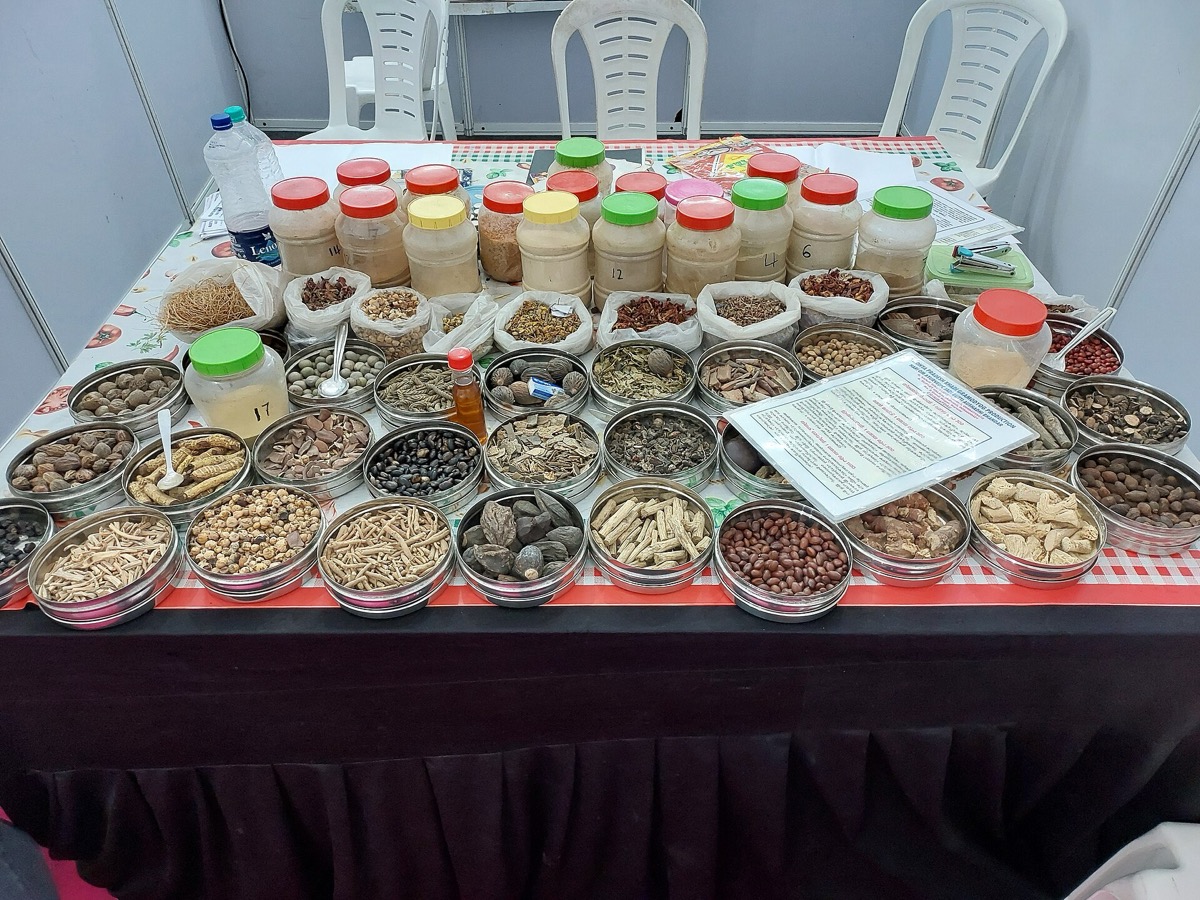
India's traditional-medicine trade just posted its freshest number yet. Exports of Ayurvedic and herbal products reached $688.89 million in FY2024-25, up 6.11% from $649.2 million a year earlier, according to a Commerce Ministry statement in January 2026. Ashwagandha capsules, standardized turmeric extract, neem, rose and sandalwood oil, herbal skincare — the whole ayurvedic products export basket moves under a cluster of HS codes: 1211 (plants and parts for pharmacy and perfumery), 1302 (vegetable saps and extracts), 3003/3004 (ayurvedic and herbal medicaments), 3301 (essential oils) and 3304 (herbal cosmetics).
Here's the tension: the buyers behind that growth — nutraceutical brands in New Jersey, cosmetic formulators in Germany, supplement importers in Dubai — are listed by name and shipment volume in global trade records. Most Indian exporters never look. They email distributors blind while their best prospects sit in a dataset, ranked by how much herbal extract they buy each quarter. This is how you find them.
The 30-second version
- India's AYUSH & herbal exports hit $688.89M in FY2024-25, up 6.11% — a fresh Commerce Ministry figure from January 2026 (source).
- Herbal vegetable saps & extracts (HS 1302) alone exported $1,289.9M in FY24 — India's single largest forest-product line; the USA bought $485.2M of it (source).
- India ships $474.34M of medicinal plants & parts (HS 1211) and ranks as the world's second-largest medicinal-plant exporter (source).
- The global Ayurveda market is forecast to grow from $20.42B (2025) to $85.83B (2033) — a 19.72% CAGR wellness tailwind (source).
- Top buyers by value: USA (~28%), Germany (~10%), Italy (~5.5%) — the top three absorb over 43% of India's herbal export value (source).
How big is India's ayurvedic products export market?
India exported $688.89 million of AYUSH and herbal products in FY2024-25, up 6.11% year on year, per the Commerce Ministry. Botanical extracts under HS 1302 added $1,289.9 million in FY24, and the US, Germany and Italy take over 43% of herbal export value.
AYUSH exports have risen every year since FY2021-22, when the figure stood near $612 million. The pace held into the current fiscal: between April 2025 and February 2026, India shipped 114.9 million kg worth ₹5,110.4 crore ($580.7 million) of AYUSH and herbal goods, per IBEF. Some of that is institutional. AYUSHEXCIL, the dedicated AYUSH Export Promotion Council, marked its fourth anniversary in January 2026 and now handles compliance support, quality certification and B2B matchmaking for exporters (source).
Behind exports sits a very large production base. India's domestic AYUSH market was valued near $43.3 billion in 2024 and is projected to reach $200 billion by 2030, per Ministry of AYUSH and IBEF figures. An engine that size throws off exportable surplus. The live question for an exporter is narrower: which herbs, oils and formulations does the world pay for, and who signs the purchase orders?
The HS codes behind herbal products export
Herbal exports don't sit under one tidy heading. They spread across five chapters of the tariff book, and knowing where your product lands is step one in finding its buyers. New to classification? Start with our guide to what an HS code is and how to find it.
| HS code | What ships under it | India export signal |
|---|---|---|
| 1302 | Vegetable saps & botanical extracts: ashwagandha, curcumin, boswellia | $1,289.9M in FY24, ~37.4% of the forest-product basket (SHEFEXIL) |
| 1211 | Medicinal plants & parts for pharmacy and perfumery | $474.34M in FY24, up 3.4%; world's No. 2 exporter (SHEFEXIL) |
| 3003 / 3004 | Finished ayurvedic & herbal medicaments | Higher-margin, brand-facing end of the trade |
| 3301 | Essential oils: rose, sandalwood, mint, lemongrass | Long-standing Indian strength |
| 3304 | Herbal cosmetics & skincare | Fastest-growing consumer-facing segment |
India grows and refines a huge share of the world's medicinal botanicals, yet most of its exporters still hunt buyers with trade-fair business cards. The names are in the shipment data. The advantage goes to whoever reads it first.
Top markets for ayurvedic products export
Demand concentrates hard, and the concentration is the opportunity. The United States anchors the market at roughly 28% of India's herbal export value, with Germany near 10% and Italy around 5.5%; the top ten destinations absorb about 63%. In vegetable saps and extracts alone, American buyers took $485.2 million, the single largest destination for Indian herbal extracts (SHEFEXIL).
Two more clusters are heating up. The UAE and wider Gulf work as both consumption and re-export hubs for Middle Eastern and African demand, while ASEAN markets lean into traditional-medicine acceptance. And here's the practical part: US and EU import records are legally public bill-of-lading data, so herbal products export data for those markets names the exact nutraceutical and cosmetic companies buying, in what volume, and how often. For a primer on turning those records into a prospect list, see how to use customs data to find buyers.
The wellness tailwind: nutraceutical, cosmetic and pharma demand
What changed isn't the herbs. It's the buyer. The same ashwagandha root used for three thousand years is now raw material for a global wellness economy: capsules, functional foods, clean-label cosmetics and clinically standardized extracts. The global Ayurveda market is projected to compound at 19.72%, from $20.42 billion in 2025 to $85.83 billion by 2033. Demand splits three ways: nutraceutical supplement brands, natural-cosmetic formulators, and pharma buyers sourcing plant-derived actives.
That last channel overlaps with the medicaments trade; the targeting playbook for pharmaceutical and API buyers applies to herbal medicaments under HS 3003/3004. The margin sits in standardized extracts and finished formulations, not bulk raw herb, because Western buyers pay up for certified, consistent, traceable material.
The compliance bar keeps rising too. Herbal extract exporters who have cracked the US market tend to report the same first question from buyers, and it isn't price: it's USFDA facility registration, plus batch-level heavy-metal and microbial test reports. In Europe, buyers increasingly want to know where a botanical stands under the EU's novel-food rules before they'll even sample. Turn up with the paperwork ready and you're ahead of most of the field.
Bulk dried herb is a commodity. A standardized, certified extract with a documented buyer relationship is a business. The data tells you which buyers pay for which grade.
How to find ayurvedic & herbal buyers with ShipScout
ShipScout is a global trade-intelligence platform indexing 11 billion-plus shipment records across 240+ countries (an affordable alternative to Panjiva and ImportGenius), built so a herbal exporter can go from "I make great extracts" to "here are 200 verified importers ranked by volume" in an afternoon. It helps Indian exporters find buyers abroad and grow exports using mirrored licensed trade data. The workflow:
- Search by HS code. Pull every shipment tagged 1302 (extracts), 1211 (botanicals) or 3004 (herbal medicaments) and surface the importers, their counterparties and shipment cadence. Start from the company directory and filter to the herbal trade.
- Rank importers by volume in a target market. Don't pitch a one-off buyer when a US nutraceutical importer is moving containers every month. Sort by tonnage and call the top of the list first.
- Vet counterparties on their real trade record. Check actual shipment history before you trust a quote, and benchmark grade and pricing against India's herbal exporter base. See how to find buyers for export from India for the full method.
- Reach decision-makers. Move from company to contact intelligence (where available) and get in front of the buyer, not the switchboard.
Data-backed targeting beats blind outreach because you pitch on shipment evidence, not hope. If ayurvedic products export is your lane — extracts, essential oils, medicaments or herbal cosmetics — the buyer list is already written. Start a free trial and search HS code 1302 to see who's buying right now.
See who’s importing ayurvedic products right now.
ShipScout turns 11B+ shipment records across 240+ countries into a live list of verified buyers and suppliers — ranked by volume, with the contacts to reach them. Create a free account and run your first search in minutes.
Start your free trial →