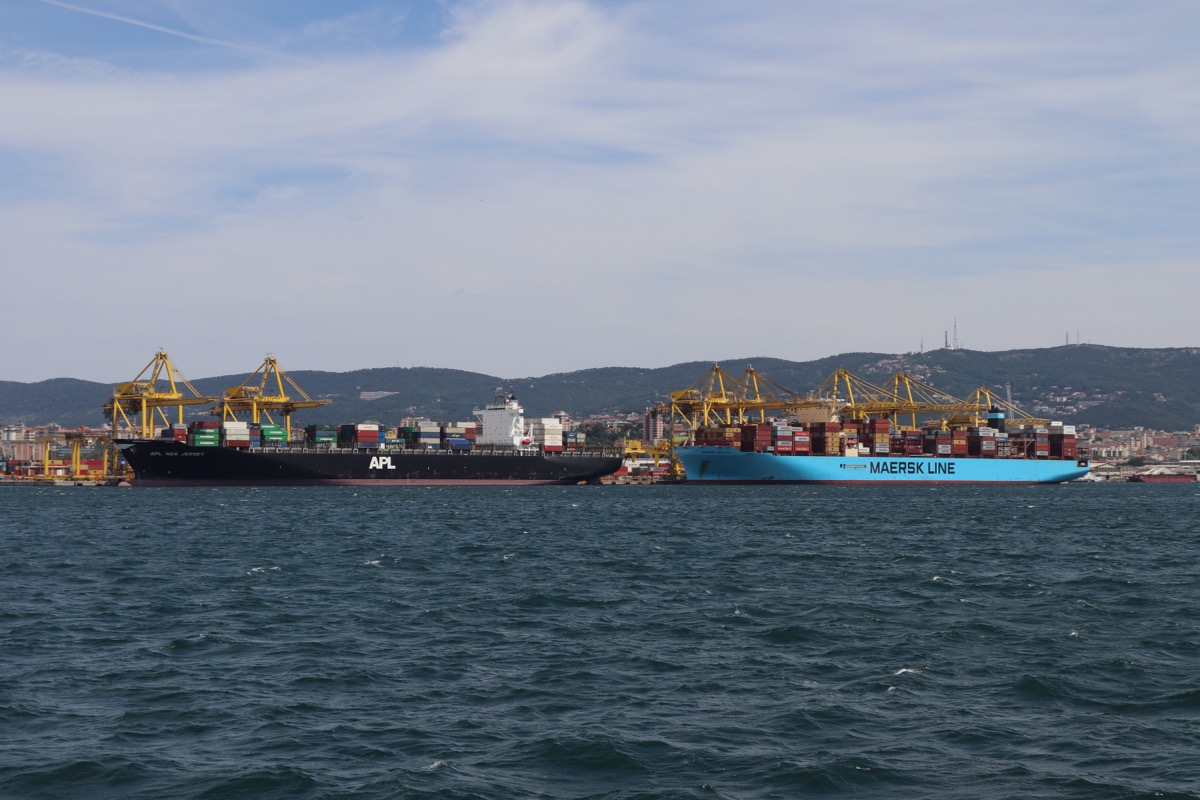
More than 80% of world trade by volume moves by sea, per UNCTAD — and in 2024 the world's ports handled a record 920 million twenty-foot equivalent units (TEU), up 6.9% on the year. Behind almost every one of those containers sits a single, unglamorous piece of paper that controls the goods, the money and the legal title: the bill of lading.
So what is a bill of lading? In plain English, a bill of lading (B/L or BoL) is the master document of a shipment — issued by the carrier when it takes cargo aboard. Understanding the bill of lading meaning, the fields on it, and how to read one is the foundation of international trade. And once you see how these records aggregate, you understand the engine behind every customs-data and trade-intelligence platform on the market.
The 30-second version
- A bill of lading plays 3 legal roles at once: receipt of goods, contract of carriage, and document of title.
- Key split: a straight B/L is non-negotiable; an order (shipper's order) B/L is negotiable and can trade hands while goods are at sea — per trade.gov.
- A master B/L (carrier→forwarder) and a house B/L (forwarder→shipper) describe the same container — they differ only in the shipper, consignee and notify-party fields.
- One B/L names the shipper, consignee, notify party, vessel, ports, goods, HS code, quantity, weight and container numbers — enough to qualify a sales lead.
- Aggregated, US bills of lading are public records and the backbone of trade intelligence; ShipScout reads 11 billion+ shipment records across 240+ countries.
What is a bill of lading?
A bill of lading is the document a carrier (or its agent) issues to acknowledge it has received cargo for shipment. US Customs and Border Protection treats it as core shipment evidence — and accepts a "bill of lading," "air waybill," "certified duplicate bill of lading," or "carrier's certificate" as proof of the right to make entry, per CBP's guidance. It is part receipt, part contract, part deed of ownership. That triple identity is exactly what makes the document — and the data inside it — so powerful.
Whoever lawfully holds the original negotiable bill of lading holds the goods. The paper, not the cargo, is what changes hands.
The 3 roles of a bill of lading
Every B/L does three jobs simultaneously. Miss any one and a shipment can stall at the port:
- 1. Receipt of goods. It confirms the carrier received the described cargo in the stated quantity and apparent condition. A "clean" B/L means no visible damage was noted on loading.
- 2. Contract of carriage. It sets the terms under which the carrier agrees to move the goods from the port of loading to the port of discharge — the rights and liabilities of both sides.
- 3. Document of title. For ocean shipments, the original negotiable B/L represents legal ownership of the cargo. As trade.gov notes, "the customer usually needs an original bill of lading as proof of ownership to take possession of the goods from the ocean carrier."
That third role is why banks accept a B/L as collateral in letters of credit, and why which Incoterms 2020 rule applies (FOB, CFR, CIF) decides who arranges and pays for the B/L and where risk transfers.
Types of bill of lading
Master B/L vs house B/L
When a freight forwarder consolidates many shippers into one container, two bills exist for the same box. The master bill of lading (MBL) is issued by the actual ocean carrier to the forwarder/NVOCC; the house bill of lading (HBL) is issued by the forwarder to the individual exporter, per Shipping Solutions. Vessel, voyage, ports, weight and seal numbers match across both — only the shipper, consignee and notify party differ. This matters for trade data: a clean dataset resolves house-level parties so you see the real buyer, not just the forwarder.
Straight, order and bearer
This split governs negotiability — who can claim the goods:
- Straight B/L — consigned to one named party. Non-negotiable; only that consignee can collect. Common for prepaid or intra-company moves.
- Order B/L — "to order" of the shipper or a bank. Negotiable: it can be endorsed and traded while the goods are still at sea, which is what lets it back a letter of credit.
- Bearer B/L — whoever physically holds it can claim the cargo. Rare and high-risk; loss equals loss of the goods.
Ocean B/L vs air waybill
Sea freight uses an ocean bill of lading. Air freight uses an air waybill (AWB), which — unlike a negotiable ocean B/L — is always shipper-specific and non-negotiable; it is a receipt and tracking document, not a document of title (trade.gov).
How to read a bill of lading — the key fields
Reading a B/L is the same skill as reading import export trade data: every box is a column of intelligence. Here is what each field tells you.
| Field on the B/L | What it tells you |
|---|---|
| Shipper (exporter) | Who sent the goods — the supplier / your competitor |
| Consignee | Who receives the goods — the buyer / your prospect |
| Notify party | Who is alerted on arrival — often the buyer, broker or true end-customer |
| Vessel & voyage | The ship and sailing — confirms the lane and timing |
| Port of loading / discharge | Origin and destination ports — the trade route |
| Description of goods | What actually crossed the border, in the shipper's words |
| HS code | Standardised product class to filter and compare on |
| Quantity & weight | Shipment size — how big the order, and the account, is |
| Container & seal numbers | The physical box and tamper seal — links records together |
The notify party is the field most beginners skip and pros read first: when a forwarder is the consignee, the notify party often reveals the real buyer. And the HS code is the universal index — its first six digits are identical worldwide — so it is how you pivot from one shipment to every comparable one. Not sure how it works? See our guide to HS codes.
Why aggregated B/L data is the backbone of trade intelligence
One bill of lading qualifies one shipment. Millions of them, aggregated and made searchable, become a live map of global trade — who ships what to whom, in what volume, on which lane. In the United States this is not a grey area: inward vessel manifest data drawn from bills of lading is a public record released by CBP, which is why decades of supply-chain research, journalism and sales prospecting rest on it.
That is the entire premise of customs-data platforms. Index every shipper and consignee, normalise the goods description against the HS code, resolve house-level parties, and you can run two queries that change how exporters sell:
- Find buyers — search a product or HS code, filter by destination, and rank importers by shipment volume. The method is laid out in our guide to using customs data to find buyers.
- Track competitors — start from a rival supplier and pull every consignee they ship to, exactly how teams use US import data to track competitors.
The volume keeps climbing. World container port throughput grew from 237 million TEU in 2000 to 792 million in 2020, 849 million in 2021 and a record 920 million in 2024, per UNCTAD's Review of Maritime Transport and Port Economics. Every box is a fresh, public signal — if you can read it.
How ShipScout turns B/L data into buyers
ShipScout reads the bill-of-lading firehose for you — 11 billion+ shipment records across 240+ countries — and returns named, ranked, contactable companies instead of raw manifests.
- Every field, searchable — query by product, HS code, shipper, consignee or port, then narrow to your markets, from US importers to German buyers and the UAE.
- Buyers ranked by volume — importers arrive pre-sorted by shipment activity, so the biggest accounts are already at the top.
- Real parties, not forwarders — house-level resolution and notify-party logic surface the actual buyer behind a consolidated shipment.
- India plus worldwide — Indian exporters can find international buyers and grow exports with data-backed targeting on mirrored licensed trade data, alongside global coverage. See finding buyers for export from India, or browse the full company directory.
You do not need to chase paper bills of lading to use what is in them. Point the data at your product, pick your markets, and let the volume ranking do the prospecting. Start a free trial and pull your first ranked buyer list from real shipment records.
See who’s importing verified import buyers right now.
ShipScout turns 11B+ shipment records across 240+ countries into a live list of verified buyers and suppliers — ranked by volume, with the contacts to reach them. Create a free account and run your first search in minutes.
Start your free trial →