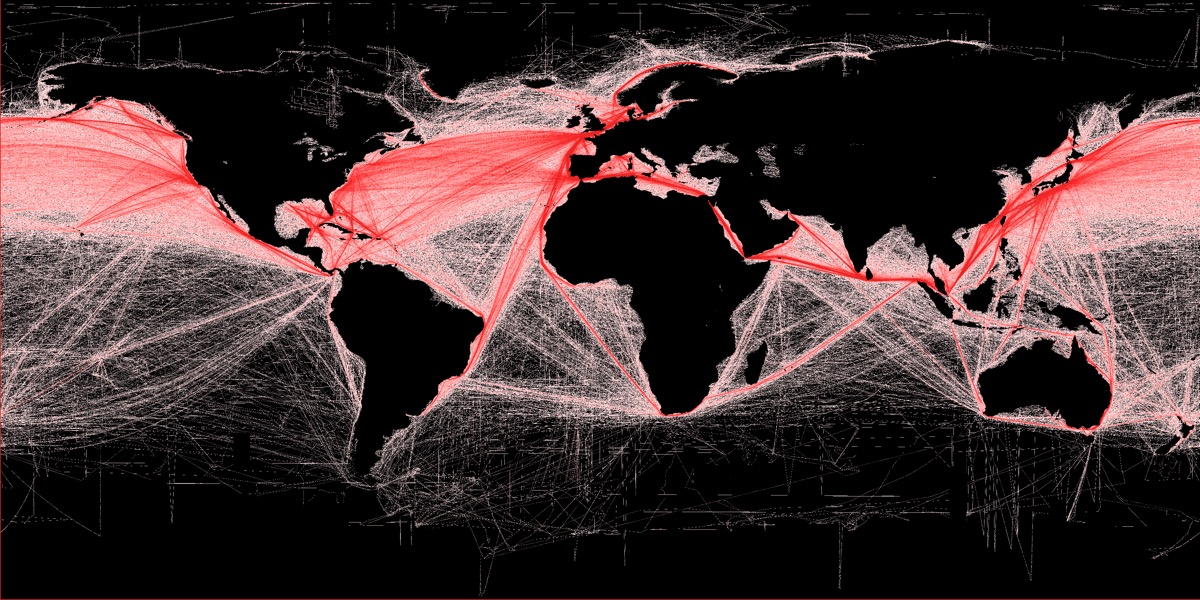
India shipped a record US$825.26 billion in goods and services in FY2024-25, and the Ministry of Commerce estimates FY2025-26 higher still at US$860.09 billion — proof the country has nearly doubled exports from US$441 billion a decade ago (PIB, Ministry of Commerce). Yet behind that headline sits the question every exporter loses sleep over: how to find buyers for export from India who place a repeat order, not just reply to one email.
This is the definitive 2026, data-driven playbook. We walk the full honest menu of ways to find export buyers — councils, government platforms, B2B marketplaces, trade fairs, LinkedIn, embassies — with real pros and cons. Then we go deep on the fastest method: using trade data to see exactly who already imports your product, rank them by volume, and reach the decision-maker. If you read one section on how to find international buyers for export, make it that one.
The 30-second version
- India exported a record US$825.26 billion in FY2024-25; FY2025-26 is estimated at US$860.09 billion.
- The US (~$85B), UAE (~$37B), and Netherlands (~$23B) are India's top three merchandise markets — start where demand already is.
- India has 14 core Export Promotion Councils plus commodity boards, and FIEO serves roughly 200,000 exporters — free, underused channels.
- DGFT's Trade Connect e-platform (launched 11 Sept 2024) already links 600,000+ IEC holders to missions and buyer leads — and it is free.
- The fastest method is trade-data buyer discovery: see who imports your product, rank by shipment volume, identify their current supplier, and reach the decision-maker.
How to find buyers for export from India: the 7 methods, ranked honestly
There is no single magic channel. The exporters who win combine two or three of these, lead with the data-driven one, and stop wasting money on the rest. Here is the full menu — what each is good for, and where it falls short.
1. Export Promotion Councils and FIEO
India runs 14 sector-specific Export Promotion Councils under the Department of Commerce — apparel, engineering (EEPC), gems and jewellery, leather, pharmaceuticals (Pharmexcil), chemicals (CHEMEXCIL) and more — alongside commodity boards for tea, coffee, spices and the like (DGFT Appendix 2T). Above them sits the Federation of Indian Export Organisations (FIEO), founded in 1965, whose members directly and indirectly serve about 200,000 exporters. Pros: credibility, buyer-seller meets, your RCMC, and subsidised pavilions at global fairs. Cons: slow, generic leads shared with hundreds of members, and little contact intelligence on the buyer behind the badge.
2. DGFT Trade Connect and government buyer-seller meets
Launched on 11 September 2024, DGFT's Trade Connect e-platform is a genuinely useful free tool: it connects more than 600,000 IEC holders to over 180 Indian Mission officials, 600+ council officials, FTA benefits, trade-event calendars, and potential-buyer information in one window (DD News). Pros: free, official, multilingual, and tied to real diplomatic channels. Cons: it points you toward markets and events — it rarely hands you a named buyer who is importing your exact HS code this quarter.
3. B2B marketplaces — IndiaMART, Alibaba, TradeIndia
Listing on IndiaMART, Alibaba or TradeIndia is the obvious first move, and it works for inbound enquiries on commoditised products. Pros: low cost to start, instant visibility, buyers come to you. Cons: you are one of thousands of identical listings, leads are sold to multiple sellers at once, price is the only lever, and "buyers" are often other resellers or tyre-kickers. Treat marketplaces as a top-of-funnel net, not a serious B2B pipeline.
Marketplaces tell you who is shopping today. Trade data tells you who is buying every month — and from whom. The second list is the one worth your sales team's time.
4. Trade fairs and expos
Physical fairs — from sector shows to the council pavilions at events DGFT now showcases Trade Connect at — still close real relationships, especially for high-value or technical goods. Pros: face-to-face trust, sample handling, dense buyer concentration. Cons: a single international booth can run lakhs of rupees in stand, travel and freight, and you only meet whoever happens to walk by. Go in with a data-built target list of buyers you already know will be there, or you are gambling.
5. LinkedIn prospecting
LinkedIn is the best free channel for reaching named decision-makers — procurement heads, category managers, founders — once you know which companies to target. Pros: direct line to a human, content builds credibility, Sales Navigator filters by industry and role. Cons: without a target list it is a guessing game, cold acceptance rates are low, and a profile never tells you whether that company actually imports your product. It is an outreach tool, not a discovery tool.
6. Embassies, trade missions and EPC delegations
Indian embassies, the Invest India network, and council-led delegations can open doors that no cold email will. Pros: warm introductions, market briefings, credibility by association. Cons: slow, relationship-gated, best suited to large or strategic deals — not your day-to-day pipeline of finding the next twenty buyers.
7. Trade-data buyer discovery — the fastest, most precise method
This is where platforms like ShipScout change the game. Instead of broadcasting and hoping, you start from the shipment record: who is already importing your product, in what volume, from which suppliers, and where. Global trade flows leave a paper trail — US bills of lading and many countries' customs records are legally public — and that trail turns "find me a buyer" into "here are the 40 companies importing my HS code into the US and UAE, ranked by volume, with a route to the decision-maker."
For Indian exporters specifically, ShipScout works as mirrored licensed trade data that helps you find buyers and grow exports with data-backed targeting — not guesswork. Pros: precise, evidence-based, lets you size a market before spending a rupee on a fair, and tells you a buyer's current supplier so you can pitch against them. Cons: the raw data needs a tool to make it usable — which is exactly the problem ShipScout solves. See our guide to using customs data to find buyers and what import-export trade data actually is.
How to find export buyers with data, in 5 steps
This is the repeatable workflow. It takes an afternoon, not a quarter.
- Step 1 — Define your product precisely. Pin down your HS code. "Turmeric" is vague; HS 091030 is searchable. The tighter the code, the cleaner your buyer list.
- Step 2 — See who already imports it. Search the product across markets and pull every company importing it. Browse the global company directory or jump to a target market like the US, the UAE, or Germany.
- Step 3 — Rank by volume. Sort importers by shipment volume so your sales team chases the buyers actually moving product — not a flat alphabetical dump.
- Step 4 — Find their current supplier. The same records show who each buyer imports from today. That tells you whether there is room to win the account and how to position on price, quality or reliability.
- Step 5 — Reach the decision-maker. Pull contact intelligence where available, then take that named buyer to LinkedIn or email with a pitch built on their actual import behaviour. Outreach grounded in "I see you import 12 containers a quarter" beats a generic intro every time.
Method comparison: which way to find buyers wins
| Method | Buyer precision | Cost | Contact intel | Speed | Best for |
|---|---|---|---|---|---|
| Trade-data discovery (ShipScout) | ✓ exact importers | Subscription + free trial | ✓ where available | Days | Targeted, data-led exporters |
| Export Promotion Councils / FIEO | — generic | Membership fee | — | Slow | Credibility, RCMC, fairs |
| DGFT Trade Connect | — market-level | Free | — | Medium | FTA + mission access |
| B2B marketplaces | — inbound, shared | Low listing fee | — | Fast | Inbound on commodities |
| Trade fairs & expos | — whoever attends | High (lakhs) | ✓ in person | Slow | High-value relationships |
| LinkedIn prospecting | — needs a target list | Free / Sales Nav | ✓ named people | Medium | Outreach once targeted |
| Embassies / trade missions | — strategic | Free / delegation cost | ✓ warm intro | Slow | Large or strategic deals |
Start where demand already is
The chart above is the strategic shortcut. India's merchandise exports hit roughly US$437 billion in FY2024-25, and the demand is concentrated: the US alone takes about US$85 billion (close to 1 in 5 export dollars), followed by the UAE at ~US$37 billion and the Netherlands at ~US$23 billion (OEC). If you are deciding where to look for buyers first, the data says start in the markets already importing at scale — then use product-level trade data to find the specific companies inside them.
How ShipScout helps you find export buyers
- See who imports your product: 11 billion+ shipment records across 240+ countries turned into verified buyer lists — browse the company directory or a market like Vietnam.
- Buyers ranked by volume: spend time on importers actually moving product. Works for any sector — see worked examples for turmeric exporters, food & agro buyers, and electronics importers.
- Contact intelligence where available: turn a company name into a route to the decision-maker so outreach starts faster, not from zero.
- Data-backed targeting, India-compliant: mirrored licensed trade data that helps Indian exporters grow with precise targeting — size a market before you book a single trade-fair stand.
The honest takeaway: councils, Trade Connect, marketplaces, fairs, LinkedIn and missions all have a place — but they tell you where to look, not exactly whom to call. Trade-data discovery tells you whom, ranked by how much they buy, with their current supplier in plain sight. That is the difference between hoping for buyers and targeting them. Start a free trial and see your buyers before you pay.
See who’s importing verified export buyers right now.
ShipScout turns 11B+ shipment records across 240+ countries into a live list of verified buyers and suppliers — ranked by volume, with the contacts to reach them. Create a free account and run your first search in minutes.
Start your free trial →