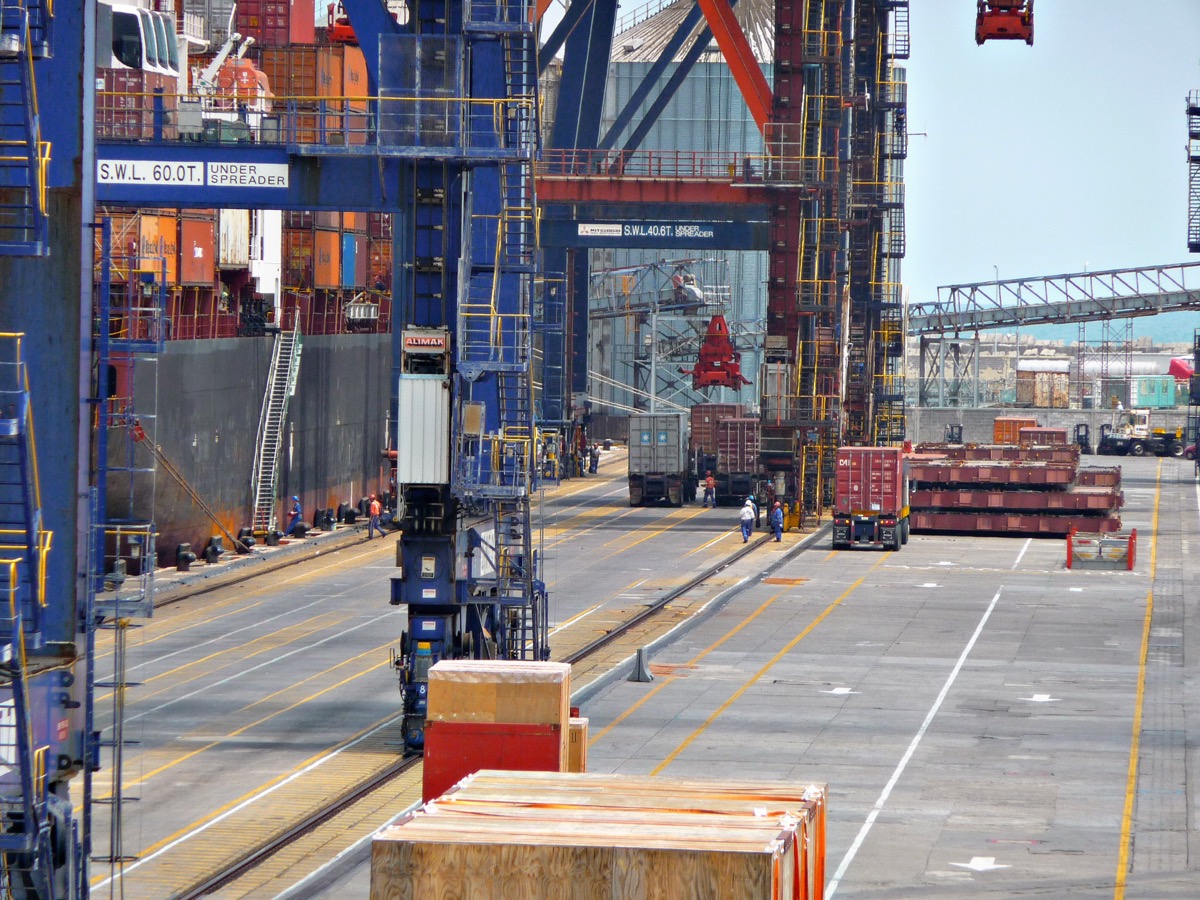
For two straight years, the biggest trading partner of the United States has not been China. It's Mexico. In 2024, US–Mexico goods trade hit a record $840 billion — the highest total the US has ever recorded with any single nation — and through early 2026 Mexico is still sitting at the top of the list. The factory floor of North America has a new center of gravity, and it's south of the Rio Grande.
This is the nearshoring boom in one number, and it is rewriting global supply chains in real time. Whether you want to sell into Mexico's surging industrial base or source finished goods out of it, the entire shift is traceable, shipment by shipment, in Mexico trade data.
The 30-second version
- US–Mexico goods trade reached a record $840 billion in 2024, making Mexico the #1 US trading partner — ahead of Canada and China.
- Mexico's total exports hit a record $617 billion in 2024, with manufactured goods alone worth $554 billion (89.8% of the total).
- The auto sector is the engine: $193.9 billion in exports, or 31.4% of everything Mexico ships.
- Foreign direct investment hit $40.9 billion in the first nine months of 2025 — a record pace — as nearshoring capital floods in.
- The USMCA's first mandatory joint review begins July 1, 2026, putting tariff-free North American trade in the spotlight.
- Every one of those flows — buyers, suppliers, volumes, HS codes — shows up in Mexico import data and Mexico export data.
Why Mexico became the nearshoring winner
The logic is simple and it's accelerating. As Washington layered tariffs onto Chinese goods and companies grew wary of 12,000-mile supply lines, manufacturers went looking for a low-cost base that sits right next door to the world's largest consumer market — and ships duty-free under a trade pact. Mexico checks every box.
The macro proof is in the customs ledgers. According to the US Census Bureau's top-trading-partners data, full-year 2024 total goods trade ran $839.9 billion with Mexico, $762.1 billion with Canada and $582.5 billion with China — Mexico clear at #1. FreightWaves, citing Census and WorldCity figures, called it the highest annual trade total the US has ever logged with any country.
Mexico's trade scale in 2026
Step back from the US lens and Mexico's own export machine is at full throttle. Mexico's total 2024 exports beat expectations at a record $617.09 billion, up 4.1% year over year, per national statistics agency INEGI. Of that, $554.44 billion — a full 89.8% — was manufactured goods, not raw commodities. That mix is what makes Mexico data so useful: these are factories and assemblers with repeat, high-frequency shipments, exactly the profile that turns a customs feed into a sales pipeline.
The sectors driving the boom
Four industries do most of the heavy lifting, and each is a distinct opportunity for exporters and sourcing teams.
Autos & auto parts — the crown jewel
The automotive sector alone generated $193.9 billion in 2024 exports, 31.4% of Mexico's total. Mexico is the top foreign supplier of auto parts to the United States, shipping $40.3 billion in parts north of the border — roughly 87% of its parts exports — while about 79.7% of the light vehicles it builds head to the US market. If you make components, tooling or raw materials, this is where the demand is concentrated.
Electronics & machinery
Mexico is a major assembly hub for TVs, computers, telecom gear and industrial machinery, much of it bound for US shelves. These categories ride the same nearshoring wave as autos — and they pull in a long tail of upstream component suppliers worth targeting.
Medical devices
This is the quiet giant. Mexico exported $19.3 billion in medical devices in 2024, ranking sixth worldwide and standing as the single largest supplier of medical devices to the US — roughly one in five devices imported into America. The Tijuana–Mexicali corridor alone hosts dozens of specialized manufacturers.
When a market is being rebuilt this fast, last year's supplier list is already out of date. The companies winning Mexico business in 2026 are the ones reading the shipment data in near real time.
The money is following the goods
Capital confirms the trend. Foreign direct investment into Mexico reached $40.9 billion in the first nine months of 2025, up 14.5% year over year — a record pace — after a record full-year 2024 of nearly $37 billion. The United States is the largest source of that capital, and over half of it lands in Mexico's manufacturing sector. New factories mean new exporters, new HS-code activity and new company names entering the customs records every single month.
USMCA and the 2026 review
The legal backbone of all this is the USMCA (T-MEC in Mexico), which keeps qualifying North American goods tariff-free. Its first mandatory six-year joint review begins July 1, 2026, with USTR public hearings already held in December 2025. The CSIS analysis of the 2026 review lays out what's at stake — rules of origin, content thresholds and the pact's long-term future. For anyone trading across this border, the review is a reason to know your supply chain cold, and trade data is how you map it.
How to actually use Mexico trade data
Customs and bill-of-lading records for markets like Mexico and the US are legally public, and they read like a sales map once you know what you're looking for. New to this? Start with our beginner's guide to import/export trade data, then a deeper playbook on using customs data to find buyers.
If you're selling INTO Mexico
- Find Mexican buyers by searching who is currently importing your product category — with names, volumes, frequency and HS codes.
- Size demand before you commit: see which importers are scaling and which are fading.
- Map the component supply chains feeding Mexico's auto, electronics and medtech plants, then position yourself upstream.
If you're sourcing FROM Mexico
- Build a verified Mexico suppliers list filtered by what factories actually ship, not by what a directory claims.
- Cross-check a supplier's real export history before you wire a deposit — see our guide to verifying a supplier before paying.
- Benchmark pricing and shipment volumes against competitors sourcing the same goods.
This is exactly what ShipScout is built for. We carry shipment-level Mexico import export data as part of 11B+ records across 240+ countries — searchable by company, product, HS code, buyer or supplier — alongside the US import data on the other side of the same border, so you can trace a flow end to end. To track competitors landing goods in the US, pair this with our guide to US import data for finding suppliers.
Start with our Mexico company directory to see active importers and exporters, jump to the US company directory to follow the trade across the border, and turn a raw customs feed into a working pipeline of leads. Start a free trial and see who's moving goods across the US–Mexico border right now.
See who’s importing Mexico importers right now.
ShipScout turns 11B+ shipment records across 240+ countries into a live list of verified buyers and suppliers — ranked by volume, with the contacts to reach them. Create a free account and run your first search in minutes.
Start your free trial →