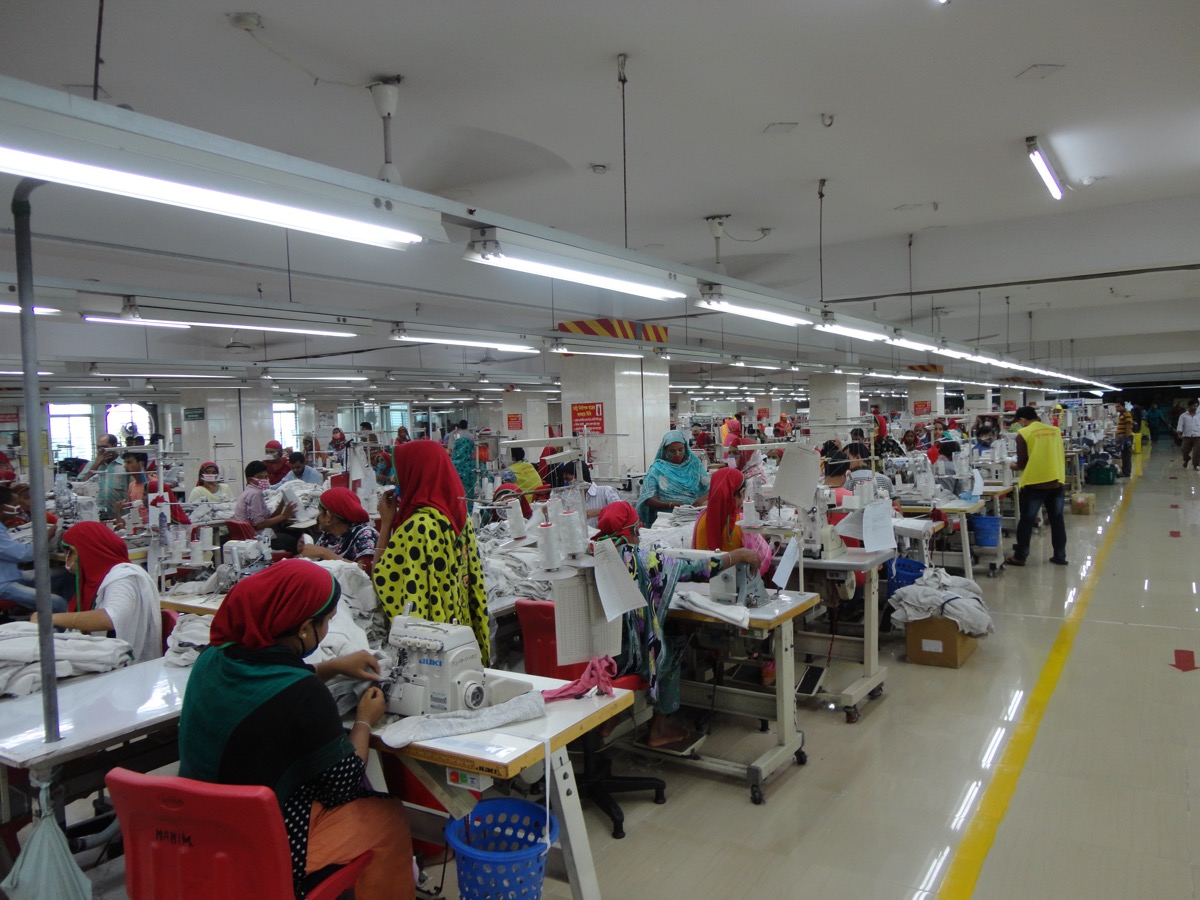
One country stitches roughly one in every fourteen garments shipped across the planet — and it isn't China. In FY2024-25 Bangladesh earned a record $48.28 billion in total exports, and $39.35 billion of that, more than 81%, came from a single sector: ready-made garments. If you source apparel, sell into the garment trade, or run a factory in Dhaka, the orders moving through Chattogram port right now are the most consequential numbers in your business — and Bangladesh trade data is how you read them.
For two decades Bangladesh has been the world's #2 apparel exporter, the low-cost workhorse behind the labels in every Western wardrobe. But 2025 turned that quiet dominance into a live, fast-moving story: tariff reshuffles, buyers fleeing China, and a record EU appetite. Whether you're a sourcing manager vetting a Bangladeshi factory's real export record before you wire a deposit, or an RMG Bangladesh exporter hunting the global buyers importing your knitwear, the import-export records now carry the answer. Here's how to use them.
The 30-second version
- Bangladesh's total exports hit a record $48.28 billion in FY2024-25, up 8.58% — and ready-made garments alone were $39.35 billion of it.
- RMG is ~81% of all Bangladesh exports and grew 8.84% year-on-year — knitwear $21.16B, woven $18.19B.
- The EU buys half of it — $19.71 billion (50.1%) — with the US at $7.54B and the UK at $4.35B.
- Bangladesh is the world's #2 apparel exporter with $38.48B in 2024 (WTO), behind only China.
- US apparel buyers gave Bangladesh a 10.53% market share in 2025, up from 9.26% — the China-exit shift in real time.
Bangladesh export data: a $48 billion engine built on garments
Start with the headline that frames everything else. Bangladesh's merchandise exports reached $48.28 billion in FY2024-25, an 8.58% jump from $44.46 billion the year before — and the apparel sector did almost all the heavy lifting. Ready-made garment exports climbed 8.84% to $39.35 billion, up from $36.15 billion. That's the highest garment-export figure in the country's history, and it cements an extraordinary fact: more than four out of every five dollars Bangladesh earns abroad comes from clothing.
No major exporting nation on earth is this concentrated in one product family. It makes Bangladesh both a sourcing powerhouse and a uniquely legible one — when nearly the entire export economy is garments, the customs and shipping records draw an exceptionally clear map of who ships what, in what volume, to whom. For a sourcing team or an exporter, that legibility is the opportunity.
Bangladesh doesn't just participate in the global garment trade — it is the global garment trade's second pillar. Reading its export records isn't a niche tactic; it's reading half the apparel sourcing map.
RMG Bangladesh: knitwear, woven, and the product lines that move
Drill into the $39.35 billion and the split is almost even. Knitwear — T-shirts, polo shirts, sweaters, underwear, leggings — generated $21.16 billion, growing 9.73%. Woven garments — shirts, trousers, jackets, denim — earned $18.19 billion, up 7.82%. Knitwear's edge is no accident: Bangladesh built deep backward linkages in knit fabric, so it captures more value and lead-time advantage on knit orders than on woven, where it still imports a lot of the fabric.
For a buyer, that split is a sourcing signal. If you need cotton knitwear at scale and price, Bangladesh's knit cluster is among the most competitive on the planet — the same dynamic that makes it a top supplier of cotton t-shirts and HS 6109 knitwear. If you're sourcing structured woven product, you'll still find enormous capacity, but the supply chain leans more on imported inputs. The export records let you tell the two apart at the factory level — which mills actually ship knit versus woven, and at what consignment size.
Where Bangladesh's garments go: the EU, US and UK buyers
The buyer geography is not a guess — it's concentrated and documented. The European Union is the giant: it absorbed $19.71 billion, or 50.1%, of Bangladesh's RMG exports in FY2024-25, up 9.10%. The United States took $7.54 billion (19.18%, up 13.79%), the United Kingdom $4.35 billion (11.05%), and Canada $1.30 billion (3.31%). Together, those three Western blocs buy more than 80% of everything Bangladesh's factories ship.
And the US story accelerated into 2025. As buyers diversified away from China after the tariff reshuffle, Bangladesh's share of the American apparel market rose to 10.53% in 2025, up from 9.26% in 2024, with calendar-year RMG shipments to the US around $8.2 billion. Washington's decision to set Bangladesh's tariff rate below several rivals' handed Dhaka's factories a window — and every percentage point China loses in the US is a purchase order looking for a new factory floor. The exporters and buyers who can see those orders moving, in the records, are the ones acting on them first. This is the same logic behind using customs data to find buyers in any market.
The world's #2 apparel exporter — in context
Step back to the global leaderboard and Bangladesh's position is unambiguous. The world apparel market hit $557.5 billion in 2024, and the WTO's ranking put China first at $165.24 billion and Bangladesh a clear second at $38.48 billion — ahead of Vietnam ($33.94B), Turkey ($17.91B) and India ($16.36B). Bangladesh held about 6.9% of all global apparel exports.
Vietnam is closing fast — it grew 9.34% in 2024 against Bangladesh's flatter year — which is exactly why the live records matter more than any annual ranking. The competitive picture between the top garment-exporting nations shifts quarter by quarter, and a static league table tells you who won last year, not who's winning the next order. Anyone serious about apparel sourcing is watching all three — Bangladesh, Vietnam, and India — in the shipment data, not the headlines.
How to vet a Bangladeshi factory before you pay
Here's the use-case that saves real money. A factory in Dhaka sends you a glossy profile claiming it ships millions of pieces a year to European brands. Is it true? Garment sourcing is riddled with middlemen who present a sub-contracted unit's capacity as their own — and the deposit is gone before you discover the gap.
Bangladesh's export shipment records let you check the claim before you commit. You can see whether a named exporter actually appears in the export data, the buyers it ships to, the products and HS codes on those consignments, and the rough volume and cadence. A factory that claims 50 containers a year but shows up on a handful of small shipments is telling you something. This is the core of verifying any international supplier before you pay — and in a garment hub built on layered sub-contracting, it's not optional. New to the underlying records? Start with what import-export trade data actually is.
How ShipScout helps you work Bangladesh's garment trade
ShipScout indexes 11 billion-plus shipment records across 240+ countries — turning the raw flow of containers into ranked, named, contactable buyer and supplier lists. For the Bangladesh garment trade specifically:
- Find RMG suppliers by product. Surface Bangladeshi exporters by knitwear or woven HS code, ranked by real shipment volume, and skip the brokers. Browse companies in Bangladesh and filter by what they actually ship.
- Vet a factory's real record. Before a deposit, confirm an exporter's buyers, products, and volume against the shipment data — not the sales deck.
- For exporters: find the buyers abroad. If you run a factory in Dhaka or Chattogram, see exactly which importers in the US and Europe are buying your category this quarter, ranked by volume, with contact intelligence where available — the same playbook in finding buyers with customs data.
- Track the China-exit shift live. Watch which buyers are diversifying into Bangladesh and Vietnam as orders move, and time your pitch to the moment a buyer is actively re-sourcing.
You don't need a $20,000 Panjiva or ImportGenius contract to do this. ShipScout was built as the affordable alternative — the same depth of global shipment records, at a fraction of the price. Start a free trial and run your first Bangladesh garment search before your competitor finishes their morning tea.
See who’s importing Bangladesh garment exporters right now.
ShipScout turns 11B+ shipment records across 240+ countries into a live list of verified buyers and suppliers — ranked by volume, with the contacts to reach them. Create a free account and run your first search in minutes.
Start your free trial →