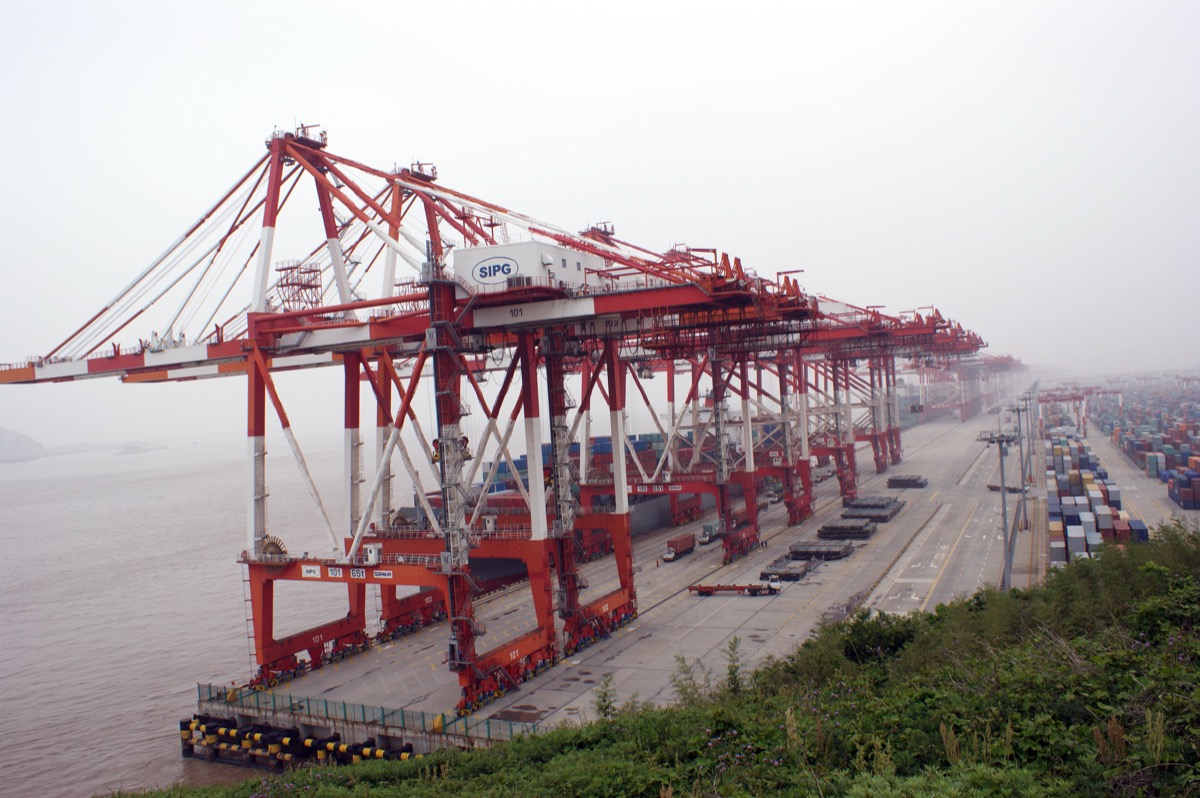
China shipped $3.77 trillion of exports in 2025 and ran a record $1.19 trillion trade surplus, lifting total foreign trade to an all-time high of $6.36 trillion (RMB 45.47 trillion), according to China's General Administration of Customs. Behind that headline sits a practical goldmine for any business: China import export data — the shipment-level record of who ships what to whom. Read it right and you can verify a Chinese supplier's real export history before you wire a deposit, or find the overseas companies already importing the exact goods you make.
This guide shows both plays. The importer use-case: stop trusting an Alibaba listing and check whether a factory actually ships your product, in your volumes, to credible buyers. The exporter use-case: if you manufacture in China (or compete with Chinese goods), use the same data to find buyers. Either way the workflow is the same — search a product or company, read the shipments, rank the counterparties.
The 30-second version
- China's 2025 exports hit $3.77 trillion, up 6.1%; total trade reached $6.36 trillion.
- ASEAN is now China's largest partner at $1.02 trillion, ahead of the EU and a shrinking US.
- Electronics led at over $1 trillion; vehicle exports jumped 21% to $142 billion on the EV boom.
- Importers: use China export data to confirm a supplier's shipment history, buyers and volumes before paying.
- Exporters: use it to find overseas buyers of Chinese-made goods and benchmark competitors' customers.
What "China import export data" actually is
Cross-border shipments generate paperwork — bills of lading, customs entries, manifests. In many jurisdictions that record is public, and aggregated into a searchable database it becomes trade intelligence: shipper name, consignee, product description, HS code, quantity, port and date. Each row is one real shipment, so a company's full export footprint is reconstructable from the trail.
The key fields to read are the bill of lading details: who shipped, who received, what HS code, how much, and how often. A genuine factory leaves a long, consistent trail to multiple buyers. A trading-company-pretending-to-be-a-factory, or an outright broker, does not.
China's 2025 trade scale and where exports go
The structural story of 2025 was diversification. As US-bound exports fell sharply — down roughly 20% year-on-year per China Briefing — China redirected goods elsewhere. ASEAN overtook every other market to become the single largest partner at $1.02 trillion, while Belt-and-Road economies absorbed $3.39 trillion — about 52% of all China trade. Africa-bound trade surged 18.4%.
For a buyer, the lesson is simple: a supplier's "biggest customer is the USA" pitch may be a year out of date. Check the destinations in the data, not the sales deck.
By product, electronics dominate. China exported over $1 trillion of electrical machinery and electronics in 2025 — its single largest category — followed by mechanical machinery near $568 billion. The fastest mover was vehicles: auto exports rose 21.4% to $142 billion on 8.32 million units, with new-energy vehicles doubling to 2.6 million units per customs data reported by CarNewsChina. The "New Three" green sectors — EVs, lithium batteries, solar — grew a combined 27.1%.
Importer play: vet a Chinese supplier before you pay
This is the highest-ROI use of China trade data. Before sending a deposit, you want answers to four questions, and shipment records answer all of them:
- Do they actually export? A real factory shows a steady stream of outbound shipments. No trail — or only a handful — is a red flag.
- Do they ship your product? Match the HS code and product description. A "stainless steel" supplier whose shipments are all garments is reselling, not making.
- At your volume? If you need 40 containers a year and their entire history is two LCL shipments, walk away.
- To credible buyers? Recognisable consignees in your region signal a factory that already clears Western compliance and QC.
Our deep-dive on how to verify an international supplier before paying walks the full checklist, and how to find reliable suppliers in China covers sourcing strategy end to end. The short version: trade data turns "trust me" into "here's their last 200 shipments."
Exporter play: find overseas buyers of Chinese-made goods
Flip the lens and the same database becomes a lead list. If you make a product in China — or anywhere — every company importing that product is a row in customs records you can read. The method mirrors our guide to using customs data to find buyers:
- Search your product's HS code among importers in your target market.
- Rank consignees by shipment volume — the biggest buyers are at the top.
- Read who they currently buy from. A buyer importing from three Chinese suppliers is open to a fourth.
- Pull the decision-maker contact (where available) and pitch with their actual volumes in hand.
Cold outreach that opens with "I see you imported 14 containers of this last quarter" lands very differently from a blind email blast.
This is competitor intelligence too: look up a rival exporter, read their buyer list, and target the same accounts. High-tech exports alone hit $750 billion in 2025 — a vast buyer universe sitting in the records.
What public China data shows, and its limits
China's own customs administration publishes monthly totals by country and product, and GACC confirmed the 2025 record. But headline aggregates won't name the factory or the buyer — for shipment-level company detail you need a platform that links manifest data across both the export and import sides. That cross-border join is what lets you follow a Chinese shipper to its named overseas consignees, and vice versa.
How ShipScout helps with China trade data
ShipScout turns 11B+ shipment records across 240+ countries into ranked, verified buyer and supplier lists — the affordable SME alternative to Panjiva, ImportGenius and Volza.
- Vet any Chinese supplier: pull their full export history, top buyers and shipment volumes before you send a deposit.
- Find buyers of your goods: rank overseas importers of your product by volume and see who they buy from today — see China company profiles.
- Contact intelligence where available: reach the decision-maker, not a generic inbox.
- Benchmark competitors: read a rival's customer list and target the same accounts across 240+ countries.
Whether you're sourcing from China or selling against it, start with the data. Start a free trial and search your first supplier or buyer in minutes.
See who’s importing China suppliers right now.
ShipScout turns 11B+ shipment records across 240+ countries into a live list of verified buyers and suppliers — ranked by volume, with the contacts to reach them. Create a free account and run your first search in minutes.
Start your free trial →