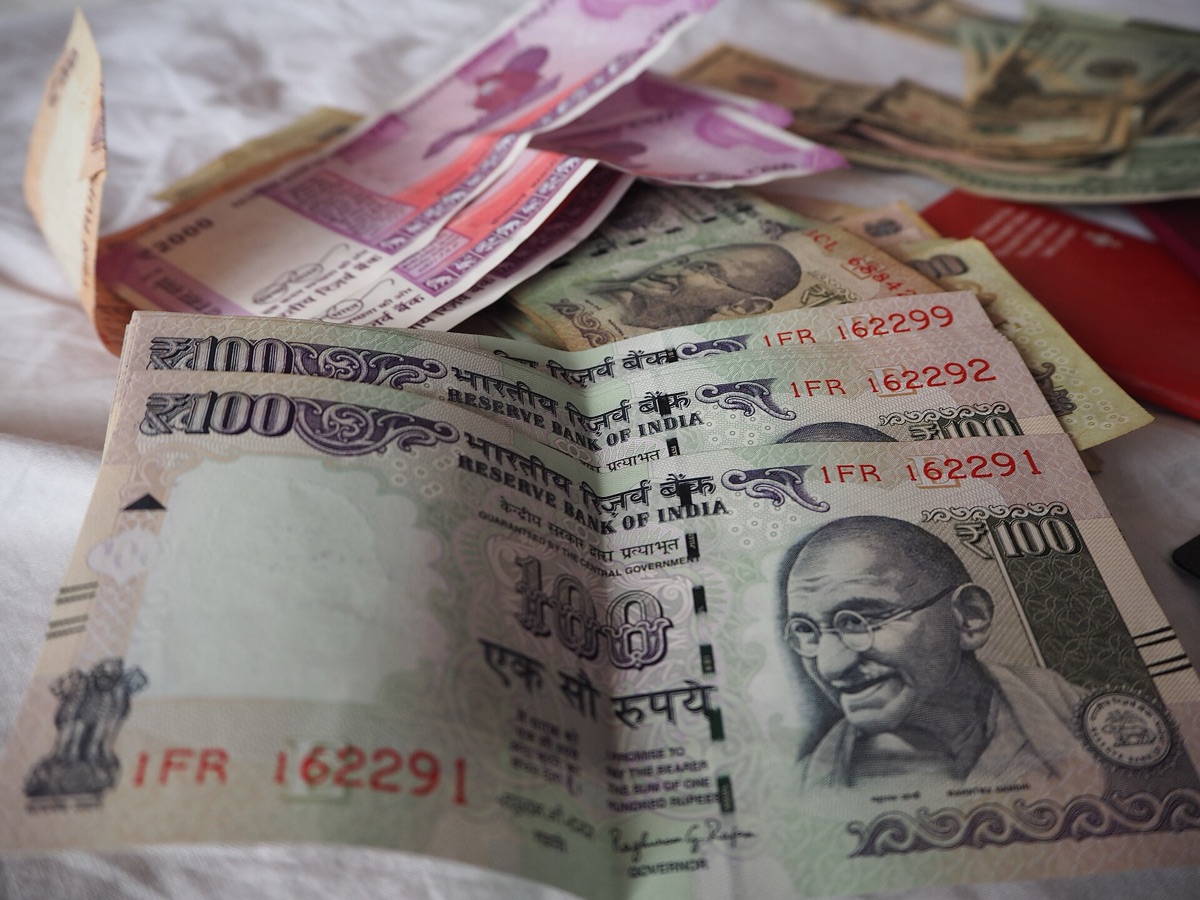
On 16 February 2026, CBIC lifted the duty drawback rate on gold jewellery exports to ₹639.59 per gram — the third hike in ten months, per Notification No. 21/2026-Customs (N.T.). Silver articles moved to ₹9,089.33 per kg, up 84% since April 2025. Behind the tweaks sits a scheme that returned ₹27,575 crore to exporters in FY2022-23, close to 13% of customs receipts that year, according to CAG's Report No. 33 of 2025. Yet the same audit found 78.7% of claims processed late. This guide covers the whole machine: meaning, AIR vs brand rate, 2026 rates, the ICEGATE flow, and where claims get stuck.
The 30-second version
- Duty drawback refunds customs duty paid on imported inputs used in export production — ₹27,575 crore disbursed in FY2022-23 across 50.2 lakh claims.
- Two routes: All Industry Rate (AIR) rides on the shipping bill; brand rate applies when AIR covers less than 80% of your actual duty cost — or there is no AIR at all.
- Post-GST it covers the customs portion only; IGST comes back through the separate GST refund route.
- Since 5 June 2024 the money lands straight in your bank via PFMS; CBIC's stated target is 90% of credits within 3 days.
- CAG's December 2025 audit: 51,252 claims pan-India were pending beyond six months. Clean filing beats fast follow-up.
What is duty drawback?
Duty drawback is a refund of the customs duty paid on imported materials that go into goods you export. Section 75 of the Customs Act, 1962 covers inputs consumed in manufacturing; Section 74 refunds up to 98% of duty when imported goods are re-exported within two years.
That is the duty drawback meaning in one line: exports should leave India zero-rated, carrying none of the import taxes baked into their inputs. It is WTO-compliant and widely used — CBIC's outreach material shows 67% of shipping bills carried a drawback claim in FY2022-23 and 60% of exporters used the scheme, with 86% of the money going to manufacturer exporters (CBIC via TaxGuru). New to all this? Start with how to start an export business from India — drawback only matters once cargo moves.
The money involved has grown faster than exports. CAG's Table 1.2 shows disbursal rising 57% in five years, tracking roughly 0.76–0.85% of export value each year:
Split by section, FY2022-23 looked like this:
- Section 75 (manufactured exports): the main route — ₹24,705 crore across 49.05 lakh shipping bills at All Industry Rates, plus ₹118 crore through 1,885 brand rate cases.
- Section 74 (re-export of imported goods): ₹2,753 crore across 1.17 lakh claims — up to 98% back, provided the goods are identifiable as the ones originally imported.
AIR vs brand rate: which route fits your shipments?
Most exporters never file anything beyond the shipping bill. The AIR schedule assigns an average rate — usually a percentage of FOB value with a value cap — to each tariff item. Brand rate exists for the cases the average treats unfairly.
| Feature | All Industry Rate (AIR) | Brand rate |
|---|---|---|
| Rate basis | Industry-average duty incidence, notified by CBIC | Actual duty paid on your specific inputs |
| Claim rides on the shipping bill | ✓ | — separate application |
| Extra documentation | — none beyond the declaration | ✓ duty-paid proofs + input consumption data |
| Who fixes it | Drawback Committee → CBIC notification | Jurisdictional Commissioner of Customs |
| Deadline | Automatic with the shipping bill | 3 months from Let Export Order, extendable +3 (AC/DC) and +6 (Commissioner) |
| Fully electronic | ✓ end to end | — still processed manually, per CAG |
| FY2022-23 usage | 49.05 lakh shipping bills | 1,885 cases |
The trigger for brand rate is the 80% test: if the AIR neutralises less than 80% of the duties actually suffered on your inputs — or your product has no AIR entry — you can apply under Rule 6 or Rule 7 of the Drawback Rules, 2017 (brand rate fixation explained; procedure set by Circular 38/2017-Customs). You can draw the AIR upfront while fixation is pending. In practice, engineering exporters with duty-heavy imported bills of material run the numbers yearly: if the gap between actual incidence and AIR is a few lakh a quarter, the paperwork pays for itself. Below that, they stay on AIR.
Duty drawback rates in 2026: what changed
The base schedule is still Notification No. 77/2023-Customs (N.T.), effective 30 October 2023, amended since — defence goods were added by 33/2024, and Chapter 71 has been revised four times as bullion prices climbed. The gold and silver trail tells the story:
| Effective | Notification | Gold jewellery (711301), ₹/g | Silver articles (711302, 711401), ₹/kg |
|---|---|---|---|
| 17 Apr 2025 | 26/2025 | 405.40 | 4,950.03 |
| 27 Oct 2025 | 67/2025 | 524.27 | 6,317.22 |
| 16 Feb 2026 | 21/2026 | 639.59 | 9,089.33 |
Two takeaways. First, duty drawback rates are not static — pricing a long-lead order off last year's schedule is a quiet margin leak. Second, the schedule's tariff items follow the HS classification (Chapter 71 above covers precious metals and jewellery), so your rate depends on getting the code right. If classification is shaky, fix that first — here is how HS codes work.
Drawback in GST: what does it still cover?
Since 1 October 2017, drawback covers only the customs portion of duties — basic customs duty and levies not subsumed by GST. The composite rates that once bundled excise and service tax ended on 30 September 2017, per the CBIC guidance note for importers and exporters. IGST paid on exports comes back through the GST system — the shipping bill doubles as that refund claim. Cesses such as Social Welfare Surcharge can still be captured through brand rate. Practical rule: drawback for customs duty, IGST through GST, and never assume one covers the other.
How do you claim duty drawback on ICEGATE?
There is no separate form for AIR claims. The shipping bill is the claim. The flow:
- Declare on the shipping bill — correct drawback tariff item, claim declaration checked. Amendments after export need officer approval.
- Validate your plumbing — active IEC, AD code registered at the port, bank account verified on PFMS via ICEGATE. Failed account validation is the most common reason money never arrives.
- Ship and watch the EGM — the claim only processes after the carrier files the Export General Manifest. Gateway-port EGM mismatches strand thousands of scrolls every month.
- Answer queries fast — claims selected for scrutiny get a query in ICES; the clock stops until you reply.
- Scroll and credit — sanctioned claims batch into a drawback scroll. Since 5 June 2024, PFMS credits the amount straight to your account — no cheques, no nodal bank. CBIC's benchmark: 90% of credits within 3 days.
- Realise and archive — bring in export proceeds within the FEMA window and keep e-BRCs mapped to shipping bills. Unrealised proceeds trigger recovery of the drawback under Rule 18, with interest.
The shipping bill is the claim. File it clean and the money follows in days; file it dirty and you chase it for months.
Why do claims get delayed or rejected?
CAG's performance audit, tabled in Parliament on 18 December 2025, is the frankest public picture of the scheme's plumbing. Across 2018-23 it logged 66 observations with a revenue implication of ₹701.69 crore (CAG press release).
Pan-India, 78.70% of drawback claims were processed late — 51,252 of them delayed beyond six months.
The recurring failure points, from the audit and from the trenches:
- EGM errors — carrier-filed manifests that do not match the shipping bill freeze the scroll.
- Bank account not PFMS-validated — sanctioned amounts sit undisbursed.
- ICES showing nil realisation even when proceeds arrived — the system is not synced with RBI's EDPMS, so exporters get demand notices for money already realised. Keep e-BRCs ready; they are your only defence.
- Brand rate bottlenecks — applications remain manual, and CAG flagged non-uniform deficiency memos across Commissionerates. Reply within the 90-day window or the application goes time-barred.
- Wrong tariff item or missing declaration — recoverable, but only through amendment requests that take weeks.
Exporters who get paid fast reconcile the drawback scroll against shipping bills on ICEGATE weekly, and chase mismatches while the trail is fresh.
How ShipScout helps
Drawback protects margin on orders you have already won. The harder problem is the next order — and that is a data problem.
- Size demand for your product across 240+ countries in the ShipScout company directory, built on 11B+ shipment records.
- Build a buyer shortlist ranked by shipment volume instead of cold directories — here is the full playbook on finding buyers for export from India.
- Verify before you quote — a buyer's shipment history and sourcing pattern tell you whether your price band even fits, and contact intelligence (where available) gets you past the info@ inbox.
- Keep the paperwork tight so refunds flow on time — our export documentation guide pairs well with this one.
The scheme hands your duties back; nobody hands you buyers. Start a free trial and see who is buying your product right now.
See who’s importing your product right now.
ShipScout turns 11B+ shipment records across 240+ countries into a live list of verified buyers and suppliers — ranked by volume, with the contacts to reach them. Create a free account and run your first search in minutes.
Start your free trial →