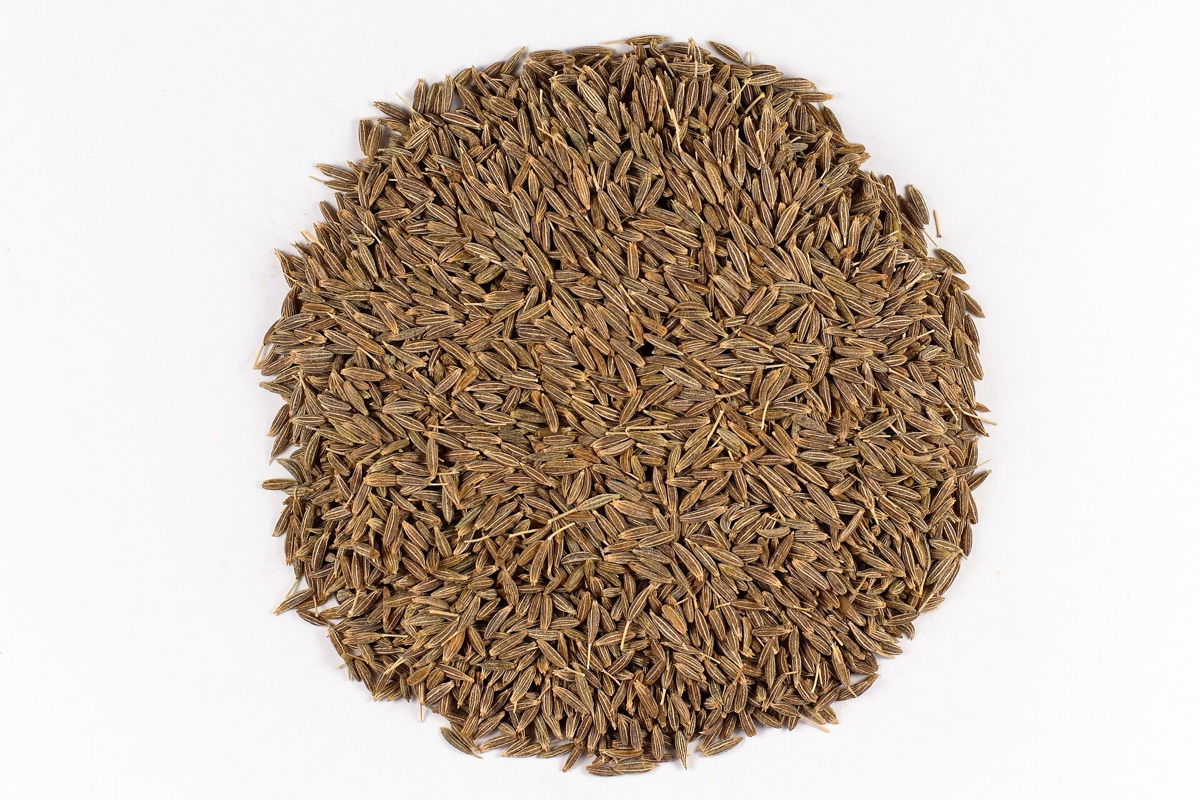
India shipped 212,502 tonnes of cumin in FY2024-25, a 39.63% jump and the biggest jeera export year on record (Sadbhaav Spices). By FY2025-26, cumin was contributing 12% of India's entire $4.43 billion spice export basket — second only to chilli among individual spices (Spices Board). That headline hides the useful layer. The cumin export data underneath names the actual buyers — importers in Guangzhou, Dhaka, Dubai and New Jersey, logged shipment by shipment with volumes and dates. One is a statistic. The other is a call list.
Most cumin exporters in Unjha or Jodhpur never open that list. They quote the brokers who visit the mandi and hope the container finds a fair price three intermediaries later. The exporters growing fastest right now work the other way round: find the importer in the shipment records first, then quote direct. Here's what the numbers say, and how to use them.
The 30-second version
- India exported a record 212,502 tonnes of cumin in FY2024-25, up 39.63% year on year (Sadbhaav Spices).
- Cumin = 12% of India's $4.43B FY2025-26 spice exports — roughly a $530 million trade, second only to chilli (Spices Board).
- China is the top buyer: $160.8 million and 34,522 tonnes in 2023, ahead of Bangladesh and the US (World Bank WITS).
- The boom followed a crash: NCDEX Unjha jeera fell from ₹62,205/quintal (Aug 2023) to ₹23,033/quintal (Apr 2024) — cheap Indian seed won back world demand (CEIC/NCDEX).
- Whole cumin seed moves under HS 090931; crushed or ground cumin under HS 090932.
What does the latest cumin export data show?
Three things: record volume, softer unit prices, and a wider buyer map. The record was set on tonnage. Alongside the full-year 212,502-tonne figure, the Federation of Indian Spice Stakeholders counted 166,132 tonnes shipped in just the first seven months of the 2024-25 marketing year (March–September) against 95,951 tonnes a year earlier — 73% growth (AgaLabs). Spices Board interim data tells the same story: 111,531 tonnes worth $369.36 million left India between April and August 2024, a 60% volume rise (ExportImportData).
Value grew slower than volume because prices had crashed — more on that below. Calendar 2023 cumin export from India was worth $616.6 million across all destinations (WITS), and India's overall spice trade hit a record $4.72 billion in FY2024-25 (IREF). India dominates this product outright: trade estimates put its share of global cumin supply near 87%, with 90% of the domestic crop grown in Gujarat and Rajasthan (Sadbhaav, ExportImportData). When the world buys jeera, it mostly buys Indian.
Which country imports the most cumin from India?
China imports the most Indian cumin — $160.8 million and 34,522 tonnes in 2023 — ahead of Bangladesh ($68.1M) and the United States ($54.5M), per World Bank WITS data. The top buyers by value:
- China: $160.8 million (34,522 t)
- Bangladesh: $68.1 million (27,255 t)
- United States: $54.5 million (11,795 t)
- UAE: $39.0 million
- United Kingdom: $24.4 million
- Malaysia: $20.9 million
- Saudi Arabia: $17.6 million
- Nepal: $17.6 million
The FY2024-25 surge redrew parts of that map. Neighbouring markets — Bangladesh and Sri Lanka in particular — drove much of the fresh demand once prices fell (AgaLabs), while the UAE keeps buying beyond its own consumption because Dubai re-exports Indian cumin across the Gulf and East Africa. China's buying is the swing factor: its purchases run in restocking waves, and a quarter of heavy Chinese bookings can move the whole Unjha market.
The cumin buyer list isn't a mystery — it's a ranking. Eight countries take the bulk of India's jeera, and the importers inside each one are named in shipment records, with volumes and dates.
Cumin HS code: 090931 and 090932
Whole cumin seed — neither crushed nor ground — ships under HS 090931; crushed or ground cumin ships under HS 090932. India's 8-digit ITC-HS schedule splits the whole-seed line further: 09093121 covers seed-quality cumin, 09093129 other non-black cumin, and 09093200 the ground product (ExportImportData). Older statistics sometimes aggregate under the legacy six-digit head 090930, which is what the WITS series above uses.
The split matters when you search cumin export data on any platform: query 090931 alone and you miss the grinders; query a text string like "jeera" and you drown in mixed-spice noise. Run both codes, then filter. New to the system? Start with our plain-English guide to what an HS code is and how to use it.
Why did jeera exports boom? The price crash explains it
Cumin ran a full boom-bust cycle in 24 months. Crop failures pushed NCDEX Unjha spot jeera to an all-time high of ₹62,204.85 per quintal on 9 August 2023; by 16 April 2024 it had collapsed to ₹23,032.80 — a fall of nearly 63% (CEIC/NCDEX). A bumper sowing in Gujarat and Rajasthan did it. At ₹60,000, world buyers had switched to Syrian and Turkish seed; at ₹25,000, they switched back — helped by the fact that political instability had cut production in Syria, Iran and Turkey just as India's crop recovered (AgaLabs).
That's the whole FY2024-25 record in one sentence: cheap Indian cumin met a world with no alternative origin. Traders in Unjha describe the same pattern from the ground — Gulf and Chinese buyers who had sat out the ₹60,000 market came back hard once the crash bottomed, and exporters who had booked forward at high prices spent the year shipping volume to recover turnover. Volume records set on cheap prices are a margin problem wearing a party hat. The exporters who protected margin were the ones selling direct instead of through two layers of intermediaries.
Cumin export price from India in 2026
The cumin export price from India currently runs about $3.09–3.80 per kg FOB for standard to premium grades, with Unjha-origin premium lots commanding $3.80–4.20 per kg (Sadbhaav). Unjha in Gujarat's Mehsana district is Asia's largest cumin trading hub, and its seed — around 3.5–4% volatile oil, up to 99.5% purity after cleaning — carries an 8–12% premium over other origins. The NCDEX jeera contract itself is benchmarked to Unjha delivery, which is why every exporter's quote starts from that mandi's price.
Every jeera quote in the world starts in one Gujarat town. Unjha's mandi price plus freight, cleaning and margin — that's the global cumin price, deconstructed.
For buyers, grade language matters: Europe and the US specify 99% or 99.5% purity, Singapore-quality nomenclature still floats around Gulf contracts, and grinders buying for 090932 powder accept lower purity at a discount. Price your quote against the destination's grade norm, not against the mandi board alone.
How ShipScout turns cumin export data into buyers
ShipScout is a global trade-intelligence platform — 11 billion-plus shipment records across 240+ countries, built as an affordable alternative to Panjiva and ImportGenius. It helps Indian spice exporters find and vet buyers with data-backed targeting, working from mirrored licensed trade data for India-linked trade. The cumin workflow:
- Search HS 090931 and 090932. Pull shipments across markets and see which importers are receiving cumin right now, at what cadence. Start in the company directory.
- Rank buyers by volume in one market. A UAE importer clearing containers monthly outranks ten one-time buyers — sort by tonnage, work the top.
- Vet before you commit. Check a buyer's real shipment history before extending credit — here's how to verify an international partner before paying.
- Reach decision-makers. Contact intelligence (where available) gets you past the info@ inbox; the broader playbook is in finding buyers for export from India and the food & agro buyer guide.
One habit that works: pull a target importer's last quarter of cumin shipments and open your first email with the exact detail — grade, tonnage, month, competing origin. Replies change when a buyer realises you can see their purchasing. The same play works across the whole spice basket, from turmeric to chilli. The jeera export record year proved the demand exists. The buyer list is already written — Start a free trial and search HS 090931 to read it.
See who’s importing cumin buyers right now.
ShipScout turns 11B+ shipment records across 240+ countries into a live list of verified buyers and suppliers — ranked by volume, with the contacts to reach them. Create a free account and run your first search in minutes.
Start your free trial →