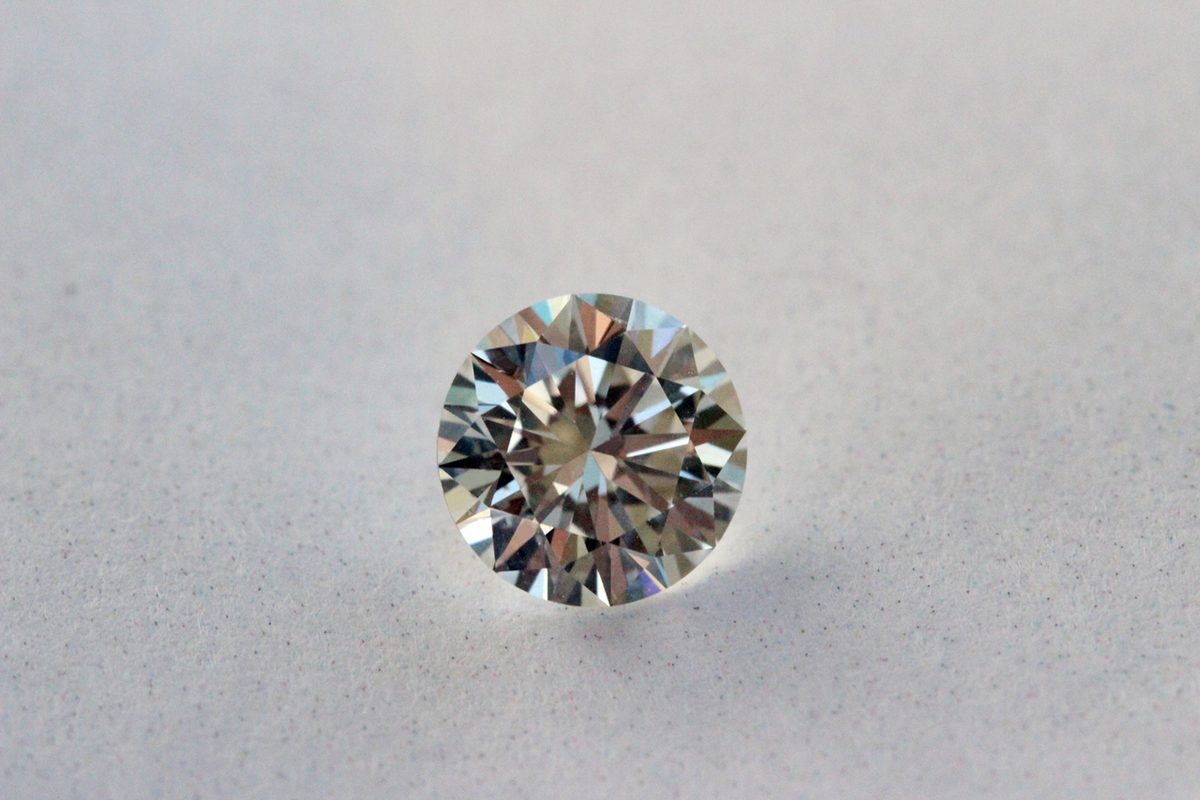
In FY2025-26 something happened that the diamond trade spent a century insisting never would: India shipped more lab-grown diamonds than natural ones by volume — 18.84 million carats of polished lab-grown against 16.00 million carats of natural, a lead of 2.8 million carats (JCK Online). The "forever" stone just got out-shipped by a stone grown in a reactor in a few weeks.
For anyone trading LGD — CVD, HPHT, loose or set — that single line rewrites the prospecting map. The buyers are real, they're ordering by the container, and they leave a paper trail in shipment records. The only question is whether you can read it before your competitor down the street in Surat does.
The 30-second version
- India's polished lab-grown diamond exports hit 18.84 million carats in FY2025-26 — overtaking natural diamonds by 2.8M carats for the first time ever (JCK).
- India's LGD export value was projected at US$1,500–1,530 million in FY25, up 7–9% (Business Standard / CARE Ratings).
- Wholesale price of a 1-carat lab-grown diamond crashed from ~$4,200 in 2018 to as low as $168 in 2025 — a 96% collapse (FinancialContent).
- Global LGD jewellery sales neared US$9 billion in 2024 before growth cooled (GlobeNewswire). The US is ~50% of world demand at a US$6.82B market (Straits Research).
- Three countries — US (52%), Hong Kong (17%), UAE (13%) — take 82% of global grown-diamond imports (Volza).
The price crash is the whole story — and the opportunity
Start with the number that broke the category. A one-carat lab-grown diamond fetched roughly $4,200 wholesale in 2018; by 2025 the floor had fallen to as little as $168 — a 96% reduction (FinancialContent). By 2025 a lab-grown stone runs about 83% cheaper than a natural diamond of comparable size and quality. Loose LGD prices fell another 20% in the twelve months to November 2024 alone.
That collapse came from one direction: supply. Cheaper, faster CVD and HPHT reactors in India and China flooded the pipeline, and as one market analysis put it, the oversupply met technology that keeps "making production increasingly efficient." The result is a textbook split between price and volume. India's polished LGD now averages roughly $60–$74 per carat at wholesale — which is why the same exports that lead the world in carats account for under 9% of India's diamond export value (JCK).
Natural and lab-grown diamonds now "operate in entirely different orbits," in analyst Edahn Golan's phrase — the volume shift is "a major shift, arguably a tectonic one, but not a doomsday scenario."
Here's the read for a trader: crashing unit prices don't kill a market — they industrialise it. Synthetic diamonds went from luxury novelty to volume commodity, and commodity markets reward whoever owns the best buyer list. The margin is thin per carat, so the win comes from more of the right buyers, found faster.
Lab-grown vs natural: the demand has already flipped at retail
The consumer side explains why the carats keep climbing. In the US — the single biggest market — lab-grown diamonds powered ~45% of engagement rings in 2024, and by 2025 more than half of couples chose an LGD centre stone (Fortune Business Insights). The US alone is about 50% of global lab-grown demand, a market sized at US$6.82 billion in 2025 (Straits Research). Globally, LGD jewellery sales approached US$9 billion in 2024 before the breakneck growth began to slow (GlobeNewswire).
Why every lab-grown deal runs through Surat
If you sell or source cut and polished diamonds, you are already doing business with Surat whether you know it or not. India processes an estimated 80–90% of the world's polished diamonds, and Surat is the engine room — the "Diamond City" with decades of cutting expertise, a multi-generational workforce, and now large-scale CVD and HPHT capacity sitting right next to it (Natural Diamonds). India also grows over 15% of the world's lab-grown rough itself, then polishes the global supply on top.
That concentration is why India's export figures are the global LGD supply story. FY24 polished lab-grown exports came in at Rs 11,611.25 crore (US$1,402.3 million), down 13.79% from FY23's US$1,680.22 million as the price crash bit into value even while volume rose (Business Standard). FY25 was then projected to recover to US$1,500–1,530 million, a 7–9% rebound, per CARE Ratings. For Indian exporters, the practical takeaway is simple: the manufacturing edge is settled — the competitive edge now is finding the buyers abroad and growing exports faster than the firm next door.
CVD vs HPHT, loose vs jewellery — match product to demand
"Lab-grown diamonds" is too blunt a category to sell against. The trade splits along lines that each carry a different buyer geography:
- CVD diamonds — chemical-vapour-deposition grown, the dominant method for larger gem-quality stones feeding US and EU jewellery brands.
- HPHT diamonds — high-pressure high-temperature, strong in melee, fancy colours, and industrial-adjacent goods.
- Loose / polished diamonds — the bread-and-butter B2B flow: certified loose LGD shipped to wholesalers and manufacturers, the bulk of what moves under the synthetic-diamond HS codes.
- Lab grown diamond jewellery — finished pieces, higher value per shipment, concentrated in US and Gulf retail demand.
On the customs side it all routes through HS heading 7104 — synthetic or reconstructed precious stones — with HS code 710410 covering synthetic diamonds and India's national line 71042010 spelling out "laboratory-created or laboratory grown or manmade or cultured or synthetic diamonds" (Credlix HSN). Pin the right code to the right destination and a worldwide search collapses to a ranked shortlist of real importers.
Where the buyers actually are
The import side is remarkably concentrated. Across global grown-diamond imports, the United States takes 52%, Hong Kong 17%, and the UAE 13% — together 82% of the entire trade (Volza). The UAE's lab-grown market alone was pegged near US$799 million in 2025, and Asia-Pacific held the largest regional share at 34.54%, driven by Indian and Chinese manufacturing demand (Fortune Business Insights).
Those aren't abstractions — they're named companies in import records. Players such as Diamond Foundry Inc (a well-known US lab-grown producer), and importers like Lab Grown Diamond USA LLC and Lab Grown Diamonds Mfg Inc, are the kind of firms that surface in US import shipment data, alongside hundreds of mid-size wholesalers most exporters have never heard of. The buyer you want is rarely the famous brand — it's the steady, growing importer two tiers down the list.
How to find lab-grown diamond buyers with ShipScout
ShipScout sits on 11B+ shipment records across 240+ countries — global trade and bill-of-lading data that lets you reverse-engineer who is buying lab-grown diamonds, in what volume, and from whom. It's the affordable alternative to ImportGenius and Panjiva, built for SME exporters who need the buyer list, not a six-figure enterprise seat. The workflow:
- Find buyers by HS code. Start from HS 710410 / 7104 and pull every importer moving synthetic diamonds. No guessing which firms are in-market — the records show it.
- Build an importer list ranked by volume. Sort buyers by shipment volume so the top of the list is your highest-value prospect. Chasing the biggest pool? Open the US importer list. Working the Gulf or the Asian re-export hubs? Pull UAE and Hong Kong buyers. Browse the full company directory and drill into any firm's trade history.
- Vet suppliers before you commit. Qualifying a CVD grower or polishing partner before you place a big order? Check their actual trade record — counterparties, frequency, volumes — instead of taking a capacity claim on faith.
- Track competitors. Watch which buyers your rivals ship to, catch a major importer switching suppliers, and move in first. Shipment data makes competitor flows legible the way no sales call ever will.
For Indian exporters, ShipScout is built to help you find buyers abroad and grow exports with data-backed targeting — surfacing live demand signals so you reach the importers most likely to convert. Start a free trial and pull your first lab-grown diamond buyer list today.
See who’s importing lab-grown diamonds right now.
ShipScout turns 11B+ shipment records across 240+ countries into a live list of verified buyers and suppliers — ranked by volume, with the contacts to reach them. Create a free account and run your first search in minutes.
Start your free trial →The LGD market in 2026 is a volume game played on thin margins — which means the winner is whoever names the buyer, ranks them by volume, and reaches them first. The carats have already crossed over. The buyer list is sitting in the shipment data, waiting.