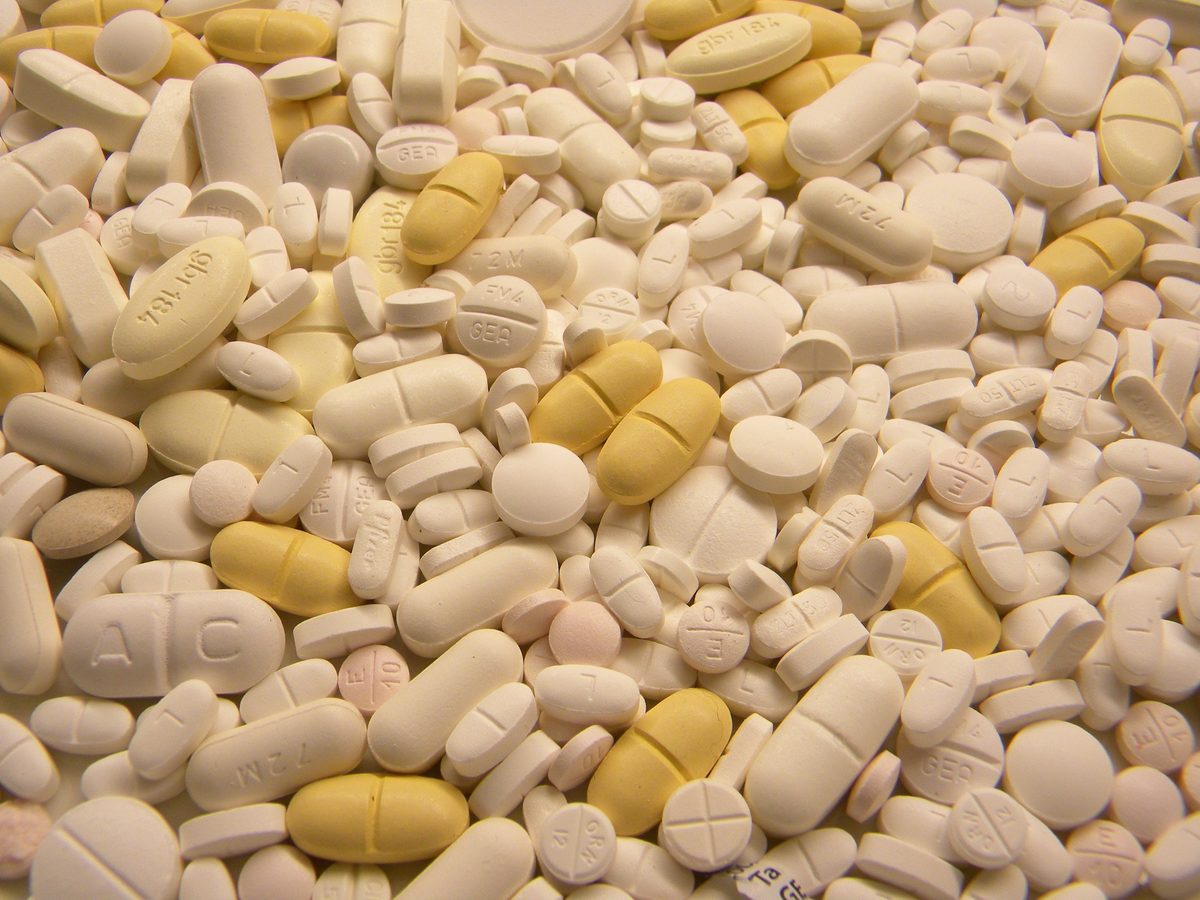
Pop two paracetamol tablets for a headache and you've touched one of the most geopolitically loaded molecules on earth. The pill might be packed in New Jersey, blistered in Lagos, or branded in São Paulo — but trace it upstream and an uncomfortable truth emerges: the active pharmaceutical ingredient (API) inside, and the chemicals used to make it, almost certainly began their journey in a single country. India, the "pharmacy of the world," still sources roughly 73.7% of its imported APIs, bulk drugs and intermediates from China — a dependence worth about USD 4.35 billion in FY2024-25 alone.
That single statistic is why paracetamol — humble, off-patent, sold by the billion-tablet — has become a strategic battleground. When the supply of key starting materials (KSM) wobbles, prices spike across three continents in weeks. For anyone exporting paracetamol API, ibuprofen API, metformin API, or finished bulk drugs, the question isn't whether the market is moving. It's whether you can see who's buying — and from whom — before your competitor does.
The 30-second version
- India's pharma exports crossed USD 30.47 billion in FY2024-25, with bulk drugs and intermediates at USD 4.32 billion.
- The global API market hit USD 238.68 billion in 2025, climbing to USD 252.16 billion in 2026.
- China supplies roughly 70%+ of many critical APIs and KSMs imported into India.
- The paracetamol/acetaminophen API segment is worth ~USD 1.43 billion in 2026; the finished-drug market tops USD 12 billion.
- China, the US and India ship 95% of global paracetamol under HS code 2924.
Why paracetamol is the canary in the pharma supply chain
Paracetamol (called acetaminophen in the US — same molecule, different name) is the world's default painkiller and fever reducer. It's cheap, generic, and made in enormous volume. That ubiquity makes it the perfect stress-test for the entire bulk drugs ecosystem: when paracetamol pricing convulses, it's a signal that something upstream — a KSM plant, a freight lane, an export ban — has snapped.
The finished-drug numbers are huge. The global acetaminophen market was USD 11.01 billion in 2025, heading to USD 11.51 billion in 2026. But the action for exporters sits one layer down, in the paracetamol API itself — the purified powder that formulators turn into tablets. That paracetamol and acetaminophen API market is valued near USD 1.43 billion in 2026, and it's where pricing power, contracts and competitive intelligence actually change hands.
The molecule is commoditised. The supply chain is anything but. Whoever maps the buyers and the raw-material flows first, wins the contract.
The China dependence problem — in real numbers
Here's the vulnerability laid bare. Even as India ships finished medicines to 200+ countries, it leans on China for the building blocks. A 2025 government disclosure confirmed India imported around USD 4.35 billion of APIs, bulk drugs and intermediates in FY2024-25, with China's share at roughly 73.7%. For a long list of specific molecules — certain antibiotics, vitamins, fermentation products — China accounts for 70% or more of India's total imports.
Paracetamol is a textbook case. Its key starting material, para-aminophenol (PAP), was for years made domestically by essentially a single plant, leaving the rest to imports. That's a frighteningly thin margin of safety for a drug this essential. When the upstream chemistry sits in one country and the downstream demand spans the planet, every exporter in the chain is exposed to shocks they can't see coming — unless they're watching the trade flows.
The policy counter-move: PLI and bulk-drug parks
India is fighting back with money. The Production Linked Incentive (PLI) scheme for bulk drugs, approved in 2020 with an outlay of ₹6,940 crore and running through FY2028-29, pays manufacturers to make KSMs, pharma intermediates and APIs at home. By March 2025, domestic production of 38 critical APIs had begun — para-aminophenol among them — directly targeting the 72% Chinese-import dependence.
Alongside the cash incentives, the government is bankrolling dedicated bulk-drug parks — shared-infrastructure clusters with common effluent treatment, power and logistics — with grants of up to ₹1,000 crore each. The established pharma belts around Hyderabad (Telangana) and Gujarat are the gravitational centres of this build-out. The strategic goal is blunt: localise the chemistry so a border tension or an export curb in one country can't ration the world's painkillers.
Where the buyers actually are
Demand for finished medicines and APIs is not evenly spread — and that's the opportunity. India's pharma exports were led by the United States at USD 8.95 billion in FY25, more than a third of the total, followed by the UK, Brazil, France and South Africa as the top five destinations. The US alone buys 75-80% of its APIs from India and China combined — a concentration that cuts both ways for sellers.
Zoom into paracetamol specifically and the map sharpens further. Per global trade data, Vietnam, Mexico and Indonesia absorb about 57% of all paracetamol imports under HS code 2924, while China, the US and India ship 95% of global supply. If you make paracetamol API, you now know exactly which three import markets to court first — and which two competitor-nations you're up against.
The molecules beyond paracetamol
The same playbook applies across the API exporters/importers landscape. The ibuprofen API market is forecast to grow from USD 5.87 billion in 2025 to USD 8.2 billion by 2035. The metformin API (hydrochloride) market is tracking toward USD 500 million by 2031 on the back of the global diabetes surge. India sits as the world's second-largest API exporter and third-largest by volume — formidable reach, but every shipment is a data point a rival can study.
How to find API/medicine buyers (and vet suppliers) with ShipScout
This is where global trade data turns strategy into a pipeline. ShipScout.ai indexes 11 billion+ shipment records across 240+ countries — an affordable alternative to ImportGenius and Panjiva — so you can stop guessing and start targeting. Here's the workflow for paracetamol API, ibuprofen API, or any bulk drugs line.
- Find buyers by HS code. Search HS code 2924 (or the granular 29420090) and pull every importer moving paracetamol and related pharma intermediates. Browse the full company database to surface buyers you've never heard of.
- Rank importers by volume. Don't waste a sales rep on a buyer who imports once a year. Sort the importer list by shipment volume and frequency, then go after the whales first — the formulators buying API by the tonne.
- Vet API suppliers before you commit. Sourcing KSMs or APIs yourself? Check a prospective supplier's real export history and shipment cadence so you're not betting a contract on a paper trader. Pull a counterparty's track record from the China or India company lists in seconds.
- Track competitors and lanes. See which markets rivals are shipping into via US importers or Germany importers, watch where demand is heating up, and move before the lane gets crowded.
For Indian API and bulk-drug makers, the play is simple: use global shipment data to find and qualify buyers abroad, vet overseas suppliers of KSMs and intermediates, and grow exports into the markets — the US, Vietnam, Mexico, South Africa — where the demand is provably real. No more cold guessing. Just buyers, ranked and reachable. Start a free trial and run your first HS-code-2924 buyer search in minutes.
See who’s importing paracetamol & APIs right now.
ShipScout turns 11B+ shipment records across 240+ countries into a live list of verified buyers and suppliers — ranked by volume, with the contacts to reach them. Create a free account and run your first search in minutes.
Start your free trial →