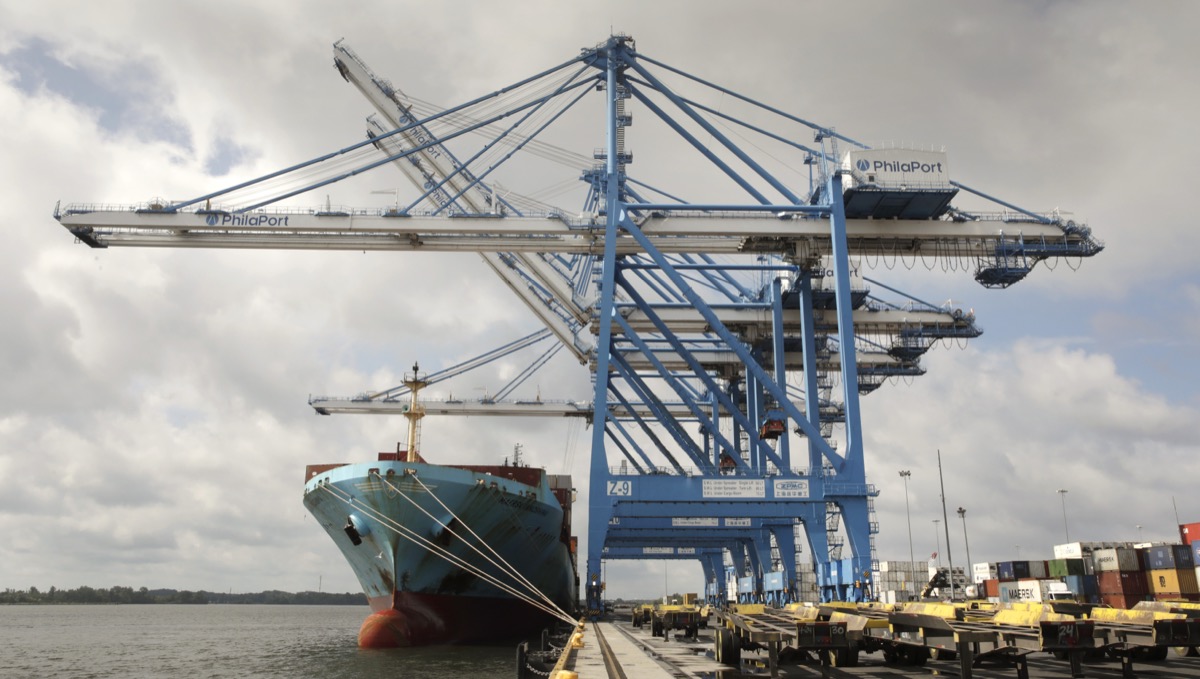
Every year, roughly 28 million shipping containers arrive at US ports — 28.1 million TEUs in 2025, per Descartes' year-end shipping report — and almost every one leaves behind a public record naming who shipped it, who received it, what was inside, and how much it was worth. That trail is customs data, and learning how to use customs data to find buyers is one of the highest-leverage skills in modern export sales.
This is a practical methodology guide. We will explain what customs and bill of lading data actually is, why it is legally public in the US and many other markets, what a single shipment record reveals, and then walk through a repeatable six-step playbook for turning raw import export data into a ranked buyer pipeline you can actually email.
The 30-second version
- US bills of lading are public records under 19 U.S.C. § 1431 and 19 CFR § 103.31 — over 25 data points per shipment can be released unless the importer files a confidentiality request.
- One shipment record reveals the buyer, supplier, product, HS code, quantity, value, port and date — everything you need to qualify a lead.
- HS codes are the universal index: 207 countries and economies use the system, covering over 98% of world merchandise trade.
- The buyer-finding playbook is 6 steps: search by product/HS code, filter by destination, rank by volume, reverse-lookup a competitor, map who a target buys from, then reach the decision-maker.
- ShipScout runs this across 11 billion+ records and 240+ countries, returning a ranked buyer list with contact intelligence where available.
What is customs data — and why is it public?
Customs data is the trade record generated when goods cross a border. In maritime trade the core document is the bill of lading — the carrier's receipt and contract for a shipment — and customs authorities compile these into manifests describing every container moving in and out of the country. In the United States, that manifest data is treated as a public record.
This is not a loophole; it is written into law. Under 19 CFR § 103.31 and the underlying statute 19 U.S.C. § 1431, US Customs and Border Protection makes inward vessel manifest data available for publication. The Data Liberation Project documents that more than 25 distinct data elements per shipment — consignee, shipper, notify party, goods description, weight, container number and more — are releasable unless an importer files an Electronic Vessel Manifest Confidentiality request to opt out. As a Federal Reserve research paper on bill-of-lading data puts it, these records have long powered investigative journalism, supply-chain monitoring and economic research.
The data already exists, it is already public, and your competitors' customers are sitting inside it. The only question is whether you know how to read it.
The US is the clearest example, but it is far from alone — many countries publish or license trade statistics at the shipment level. For a deeper primer, see our guide to import export trade data for beginners.
What one shipment record reveals
The power of customs data is in the density of a single row. A typical bill-of-lading record gives you:
| Field | What it tells you |
|---|---|
| Consignee (buyer) | The company importing the goods — your prospect |
| Shipper (supplier) | Who they buy from today — your competitor |
| Product description | Exactly what crossed the border |
| HS code | The standardised product classification to filter on |
| Quantity & value | Volume and spend — how big the account is |
| Port & date | Lane, recency and buying cadence |
Read across a buyer's shipments over time and you can see how often they order, whether volume is growing, and which suppliers they split orders across. That is qualification data most sales teams would pay a research firm for — and it is in the record. To learn the anatomy of these documents, read our guide to reading bill of lading data.
The 6-step playbook to find buyers with customs data
Here is the repeatable methodology. Each step narrows a global haystack into a shortlist of named, ranked, contactable buyers.
Step 1 — Search by product or HS code
Start with what you sell, expressed as an HS code. The Harmonized System is the universal index for trade: per the World Customs Organization, it is used by 207 countries and economies and classifies over 98% of global merchandise. The first six digits are identical worldwide, so an HS search cuts cleanly across markets. Not sure of yours? Use our guide to finding and using HS codes, or the official trade.gov HS reference.
Step 2 — Filter by destination country
You do not want every importer on earth — you want the ones in the markets you can actually serve. Filter the result set by destination country to focus on, say, US buyers, German distributors, or Gulf wholesalers. This is where global coverage matters: a US-only dataset cannot show you who imports your product into the UAE. Browse live importer directories by market, such as US importers or German buyers.
Step 3 — Rank importers by shipment volume
Not all buyers are equal. Sort the filtered importers by total shipment volume or value so the biggest, most active accounts rise to the top. A buyer importing your product every month at high volume is a far better first call than one that ordered a single trial container two years ago. Volume ranking turns a flat list into a prioritised pipeline.
Step 4 — Reverse-lookup a competitor's customers
Flip the search. Instead of starting from a product, start from a supplier — a competitor — and pull every consignee they have shipped to. In one query you inherit a list of companies that already buy exactly what you sell, from someone who is not you. This competitor reverse-lookup is the single fastest way to build a target list, and it is the backbone of how teams use US import data to track competitors.
Step 5 — Map who a target buyer currently buys from
Before you pitch a specific dream account, look at their import history to see which suppliers they currently use, in what volumes, and from which countries. Now you know their incumbent, roughly what they pay, and whether they multi-source. You walk into the conversation already knowing the gap you can fill — a fresh lane, a better price, a second source for supply security.
Step 6 — Reach the decision-maker
A company name is a lead; a named person is a meeting. The final step is layering contact intelligence onto the ranked accounts — the buyer, procurement or sourcing contact — so outreach lands in a real inbox rather than a generic info@ address. Treat this as "contact intelligence where available" rather than a guaranteed phone number on every record, and pair it with the buyer context from Step 5 for a message that actually gets a reply.
US container volumes have held near record highs — 28.2 million TEUs in 2024 and 28.1 million in 2025, up sharply from the 25.0 million of 2023, per Descartes. Each year is millions of fresh, public buyer signals. The dataset is not shrinking; the advantage goes to whoever mines it first.
How ShipScout helps you find buyers
ShipScout runs this entire six-step playbook on one platform, across 11 billion+ shipment records and 240+ countries — so you spend minutes building a shortlist instead of weeks wrangling raw files.
- Search and filter in one place — query by product or HS code, then narrow by destination across global markets, from the US to Vietnam and the UAE.
- Buyers ranked by volume — importers arrive pre-sorted by shipment activity, so your highest-value targets are already at the top of the list.
- Competitor reverse-lookup — pull any supplier's customer base in a single search and inherit a ready-made target list.
- India plus worldwide — Indian exporters can find international buyers and grow exports with data-backed targeting on mirrored licensed trade data, alongside global coverage. See how to find buyers for export from India, or browse the full company directory.
You do not need a procurement budget or a data-science team to put public trade data to work — you need the right product, the right markets, and a tool that ranks the buyers for you. Start a free trial and pull your first ranked buyer list today.
See who’s importing verified import buyers right now.
ShipScout turns 11B+ shipment records across 240+ countries into a live list of verified buyers and suppliers — ranked by volume, with the contacts to reach them. Create a free account and run your first search in minutes.
Start your free trial →