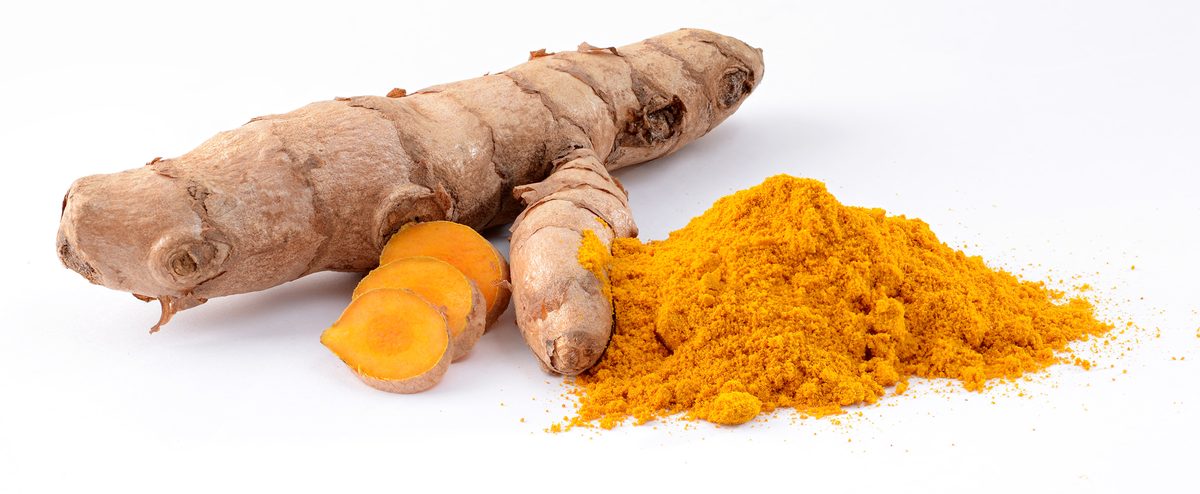
In one fiscal year, the world's appetite for India's golden spice jumped by half. Turmeric exports from India hit $341.54 million in FY2024-25 — a 50.7% surge over the $226.58 million it shipped the year before. That's not a slow climb. That's a market discovering, almost overnight, that it wants more of one ingredient than it can comfortably source.
And here's the tension every food-and-agro trader should feel in their gut: the buyers behind that surge — the importers in Dhaka, Dubai, Casablanca and New Jersey writing the checks — are listed, by name and volume, inside global shipment records. Most exporters never look. They cold-pitch blindly while their best prospects sit in a dataset, sorted by exactly how much turmeric they buy each year. This is how you find them.
The 30-second version
- India's turmeric exports rose 50.7% to $341.54M in FY2024-25, on roughly 176,325 metric tonnes shipped (source).
- India commands about 66% of world turmeric exports and an estimated ~80% of global production (source).
- The top buyers, by volume: Bangladesh (34,073 MT), UAE (25,135 MT), Morocco (9,390 MT), Malaysia (8,825 MT), USA (8,536 MT) (source).
- The curcumin market hit ~$678.4M in 2025 and is forecast to keep compounding into the 2030s on nutraceutical demand (source).
- India launched a National Turmeric Board targeting $1 billion in exports by 2030 (source).
Why turmeric is suddenly a billion-dollar conversation
Turmeric has been a kitchen staple for four thousand years. What changed isn't the spice — it's the buyer. The same dried turmeric that flavors a curry is now the raw material for a global wellness economy. Curcumin, the bright-yellow compound that gives turmeric its color and its anti-inflammatory reputation, has become a nutraceutical darling. The global curcumin market was valued at roughly $678.4 million in 2025, and natural-source curcumin extract — the kind pulled from real turmeric rather than synthesized — is the fastest-growing slice, because supplement shoppers want "natural" on the label.
That demand reshapes what crosses borders. Bulk turmeric fingers and turmeric powder still move in volume, but the high-margin growth is in standardized curcumin extract destined for capsules, functional foods and natural cosmetics. The varieties matter here: Erode and Salem turmeric from Tamil Nadu and the famed high-curcumin Alleppey turmeric are prized precisely because buyers in the US and Europe demand high curcumin content for supplement-grade material. As one trade analysis put it bluntly, the US market wants very high curcumin turmeric for health supplements — generic feed-grade powder won't clear their spec.
India produces roughly four out of every five kilos of turmeric on earth — yet most of its exporters still find buyers by guesswork. The names are in the data. The advantage goes to whoever reads it first.
India dominates — and is now organizing to dominate harder
India isn't just the largest turmeric exporter; it is the structural center of the entire trade, holding about 66% of world export share and around 80% of production. Maharashtra alone accounted for $155.35 million — 45.5% — of India's turmeric exports in FY2024-25, with Telangana's Nizamabad belt and Tamil Nadu's Erode/Salem clusters feeding the rest.
The signal that matters for the next five years: India has put government muscle behind growth. The National Turmeric Board, whose headquarters was inaugurated in Nizamabad, Telangana on June 29, 2025, is openly chasing a $1 billion export target by 2030 and aims to roughly double production toward 20 lakh tonnes. When a producing nation this dominant decides to formalize branding, quality and market access, the volume of exportable supply rises — and so does competition for the buyers who absorb it.
Who's actually buying — and at what price
Volume tells you where the money goes. In FY2024-25, Bangladesh led by tonnage at 34,073 MT, followed by the UAE at 25,135 MT — a re-export and consumption hub for the wider Middle East — then Morocco, Malaysia and the United States. The US is the most valuable single market: by import value it has held the largest share of global turmeric purchases at roughly 18.94%, reflecting that American buyers pay up for clean, high-curcumin, supplement-grade material rather than commodity bulk. Iran, Japan, the UK and Germany round out the recurring destination list.
On price, the market is volatile enough to reward anyone watching it closely. Through early-to-mid 2026, NCDEX near-month turmeric futures have traded in a band roughly between ₹16,500 and ₹18,000 per quintal, with spot mandi rates in Nizamabad and Erode swinging on harvest timing and curcumin grade. For an exporter, that spread between feed-grade and high-curcumin lots is the whole game — and knowing which buyers pay for which grade is the difference between a thin margin and a real one.
The intelligence gap most turmeric exporters never close
Here's the uncomfortable part. The buyer names, the volumes, the shipment frequencies — they exist. Platforms like ShipScout sit on 11 billion-plus shipment records across 240+ countries, and somewhere in that pile is the complete, ranked list of who imports turmeric under HS code 091030 and how much they move each quarter. Yet most small and mid-size exporters still find buyers through trade-fair business cards and hope.
The companies that show up repeatedly in import records — outfits like Turmerica LLC appear as turmeric buyers in shipment data — are reachable today. Not as endorsements; simply as proof that the trail of who-buys-what is sitting there, waiting to be read. The exporters who win are the ones treating that data as a prospecting list, not a curiosity.
How to find turmeric buyers with ShipScout
ShipScout is a global trade-intelligence platform — an affordable alternative to ImportGenius and Panjiva — built so a food-and-agro exporter can go from "I make great turmeric" to "here are 200 verified importers ranked by volume" in an afternoon. Here's the workflow:
- Search by HS code 091030. Pull every shipment tagged as turmeric across markets and instantly see the importers, their counterparties and shipment cadence. Start from the company directory and filter to the spice trade.
- Rank importers by volume. Don't pitch the 100-kg hobbyist when a US-based importer is moving containers every month. Sort the importer list by tonnage and call the top of the list first.
- Hit the highest-value markets directly. The US, the UAE and Bangladesh are where the volume and the money sit — drill straight into buyers active in each.
- Vet suppliers and track competitors. Check a counterparty's shipment history before you trust a quote, and watch which buyers your rival exporters are shipping to — then go win those accounts. (You can also study the broader India export landscape to benchmark grade and pricing.)
The data-backed approach beats blind outreach every time: instead of guessing, you make decisions on real shipment evidence. If you export turmeric, turmeric powder, dried turmeric, organic turmeric or curcumin extract, the buyer list is already written — you just need to open it. Start a free trial and search HS code 091030 to see who's buying right now.
See who’s importing turmeric right now.
ShipScout turns 11B+ shipment records across 240+ countries into a live list of verified buyers and suppliers — ranked by volume, with the contacts to reach them. Create a free account and run your first search in minutes.
Start your free trial →