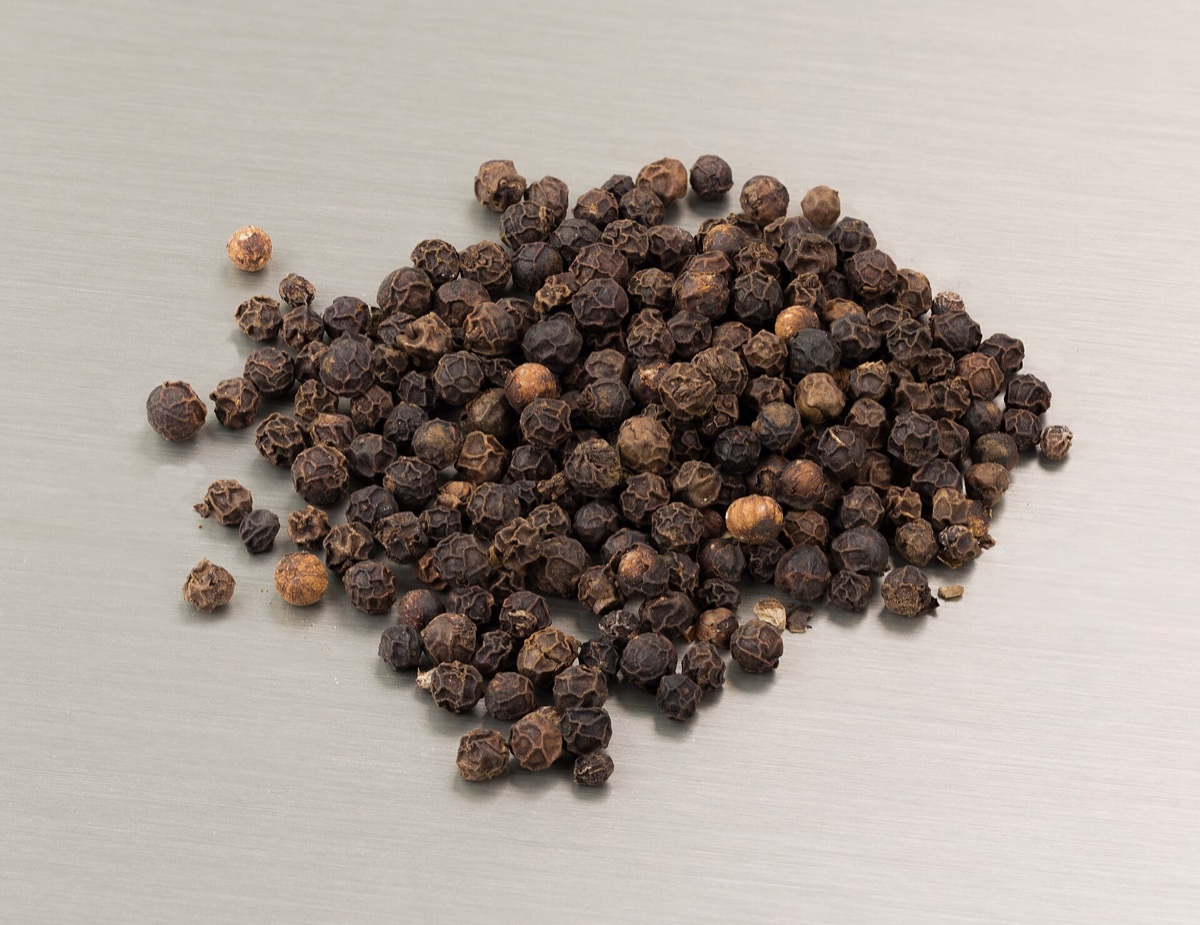
Vietnam closed 2025 with $1.66 billion in pepper export earnings, an all-time record, on 247,482 tonnes shipped (VietnamPlus). Prices did the work: black pepper averaged $6,607 per tonne, up more than 30% in a year. Behind the record sits a shrinking crop — global production has fallen 33% in six years, from 643,000 tonnes in 2018/19 to roughly 430,000 tonnes in 2024/25 (Nedspice pepper report). The black pepper export market now runs on tight supply, firm prices and a US buyer that just came back after a year of tariff paralysis.
This post reads the shipment data behind those headlines: which black pepper exporting countries dominate, who actually buys in the US and Europe, what HS 090411 and 090412 cover, and how an exporter turns the records into orders.
The 30-second version
- Vietnam set a record in 2025: $1.66 billion in pepper exports on 247,482 tonnes, with black pepper averaging $6,607/tonne (VietnamPlus).
- Vietnam holds 43.2% of world black pepper exports; Indonesia ($311.3M), Brazil ($285.9M), Sri Lanka ($171.3M) and India ($114.1M) follow (World's Top Exports, 2024).
- The US is the #1 buyer at $540.5 million of imports — and pepper re-entered the US tariff-free on 13 November 2025 when reciprocal tariffs were lifted from spices (White House).
- Global output is down 33% since 2018/19; Vietnam's 2025/26 crop is projected at just 153,000 tonnes, less than half its 2018/19 peak (Nedspice).
- Whole pepper ships under HS 090411; crushed or ground under HS 090412.
What does black pepper export data show in 2026?
A market squeezed from the supply side. After prices crashed between 2016 and 2020, farmers in Vietnam ripped out pepper vines for durian and coffee; acreage there has dropped 44% since 2016/17, and the 2025/26 harvest — arriving between December 2025 and May 2026 — is projected at 153,000 tonnes against 322,000 at the 2018/19 peak (Nedspice). Prices responded the way they always do: a 69% surge through 2024, then a high plateau through 2025.
The odd detail in the export data: Vietnam ships far more than it grows. It imported 42,688 tonnes of pepper worth $266.2 million in 2025, mostly Brazilian, to blend, process and re-export (VietnamPlus). Traders in Ho Chi Minh City routinely quote a grinder in Hamburg with Brazilian berries cleaned in Binh Duong. Origin on the certificate matters less than spec, steam treatment and price per tonne of piperine.
Which country exports the most black pepper?
Vietnam exports the most black pepper — $1.2 billion in 2024, 43.2% of the world total, rising to a record $1.66 billion in 2025. Indonesia, Brazil, Sri Lanka and India complete the top five, and together the five ship over three-quarters of world supply (World's Top Exports).
The top black pepper exporting countries by 2024 value:
- Vietnam: $1.2 billion (43.2%)
- Indonesia: $311.3 million
- Brazil: $285.9 million
- Sri Lanka: $171.3 million
- India: $114.1 million
Volume tells the same story more starkly. In 2025 Vietnam exported around 241,000–247,000 tonnes, Brazil about 85,000, Indonesia 24,000 and India roughly 16,000 (Nedspice, VPSA data). Brazil is the one to watch: its exports jumped about 30% in 2025 as the crop recovered, and Vietnam alone pulled in 19,000 tonnes of it.
Black pepper HS code: 090411 and 090412
Pepper of the genus Piper, neither crushed nor ground, travels under HS 090411; crushed or ground pepper under HS 090412 (World's Top Exports). Two traps when you query these codes. First, 090411 covers black, white and green peppercorns alike, so filter shipment descriptions if you only want black. Second, the price gap between the codes is smaller than you'd expect — whole pepper averaged $5,209/tonne in 2024 against $5,862 for ground — because grinding adds weight-loss and sterilisation cost, not much margin. New to code-based searching? Start with how HS codes work.
Vietnam vs India: the volume king and the premium grower
India grows the world's most storied pepper and exports almost none of it. The 2024/25 Indian crop fell to a record-low 48,000 tonnes after El Niño heat, while domestic consumption ran near 81,000 tonnes — so India imported 38,000 tonnes and exported only about 16,000 (Nedspice). In fact India was the world's #2 pepper importer in 2024 at $265.8 million — more than double its export value (World's Top Exports). Pepper now makes up only around 3% of India's $4.43 billion spice export basket (Spices Board).
Kochi pepper at ₹716 a kilo is a losing trade against Vietnamese ASTA at $6,630 a tonne — unless the label says Malabar or Tellicherry, and the buyer is paying for exactly that.
That price gap defines the strategy. Malabar garbled pepper traded around ₹716/kg at Kochi in March 2026, with Ernakulam quotes touching ₹800/kg by mid-year (Commodity Online) — roughly $8,600–9,600 a tonne, far above Vietnamese FOB. Indian exporters who thrive sell provenance, not volume: Tellicherry extra bold to US specialty grinders, MG1 to Gulf and European gourmet packers. Growers around Idukki and Wayanad watch the same playbook that works for cumin and cardamom — data-backed targeting of the buyers who pay for grade, covered in our food and agro export guide.
Who buys: the US and EU lanes in 2026
The United States imports the most — $540.5 million in 2024, 21.5% of world purchases (World's Top Exports). But 2025 was chaos on that lane. Reciprocal tariffs left US buyers working down inventory: shipments from Vietnam to the US fell nearly 24% to 55,082 tonnes, still 22.3% of Vietnam's exports (VietnamPlus). Then Washington reversed course: after the October US–Vietnam trade framework (USTR), a 14 November executive order removed reciprocal tariffs from "cocoa and spices" effective 13 November 2025 (White House). Pepper enters the US at zero again. Expect 2026 restocking orders to land just as Vietnam's harvest peaks in March–April — exporters who mapped US importers in advance get those POs first.
Brazil's share of German pepper imports collapsed from 45% to 21% in four years on salmonella rejections. Every failed lab test in Hamburg is a buyer forced to switch origins — visible in the data before the inquiry goes out.
Europe buys 100,000–120,000 tonnes a year. Germany leads at 26,000 tonnes (23% of European imports), and Vietnam now supplies 62% of German volume, up from 39% in 2020, largely at Brazil's expense (CBI). Growth sits in the UK (+7% a year) and the Netherlands (+8.4%). EU buyers demand steam-sterilised, residue-tested product — a hurdle, and a moat once you clear it.
Black pepper export prices in 2026
Benchmark FOB (average of Vietnam, Indonesia and Brazil ASTA grade) stood at $6,630/tonne for black and $9,682 for white pepper at end-June 2025, versus a March 2020 floor of $1,885 and a 2015 mania peak of $9,980 (Nedspice). Vietnam's full-year 2025 average export price of $6,607/tonne ran 30% above 2024 (VietnamPlus). With global stocks-to-demand trending toward record lows and supply recovery slow — new planting keeps losing the farm-economics fight to durian and coffee — the floor under prices looks solid into 2026. Practically, that means exporters hold quote validity to a week or less and buy back-to-back against confirmed orders; a flat quarterly price is an invitation to lose a container's margin.
How ShipScout turns black pepper export data into buyers
ShipScout is a global trade-intelligence platform — 11 billion-plus shipment records across 240+ countries, built as an affordable alternative to Panjiva and ImportGenius. US, EU and other public customs and bill-of-lading records are searchable directly; for India-linked trade it works from mirrored licensed trade data, helping exporters find buyers with data-backed targeting. The pepper workflow:
- Search HS 090411 and 090412. See which grinders, packers and distributors received pepper last month, from which origin, how often. Start in the company directory.
- Rank buyers by cadence, not size. A mid-size US spice packer clearing a container every three weeks beats a giant that tenders once a year. Post-exemption US restocking makes this list move fast.
- Read origin switches. A German importer whose Brazilian volumes stopped after a rejection is actively re-sourcing — the warmest cold call in the trade.
- Vet before you ship. Check a counterparty's real shipment history first — here's how to verify an international partner before paying, and the wider playbook in finding buyers for export from India.
Supply is short, the US door just reopened, and the buyer list already exists in the shipment records. Start a free trial and search HS 090411 to read it.
See who’s importing black pepper buyers right now.
ShipScout turns 11B+ shipment records across 240+ countries into a live list of verified buyers and suppliers — ranked by volume, with the contacts to reach them. Create a free account and run your first search in minutes.
Start your free trial →