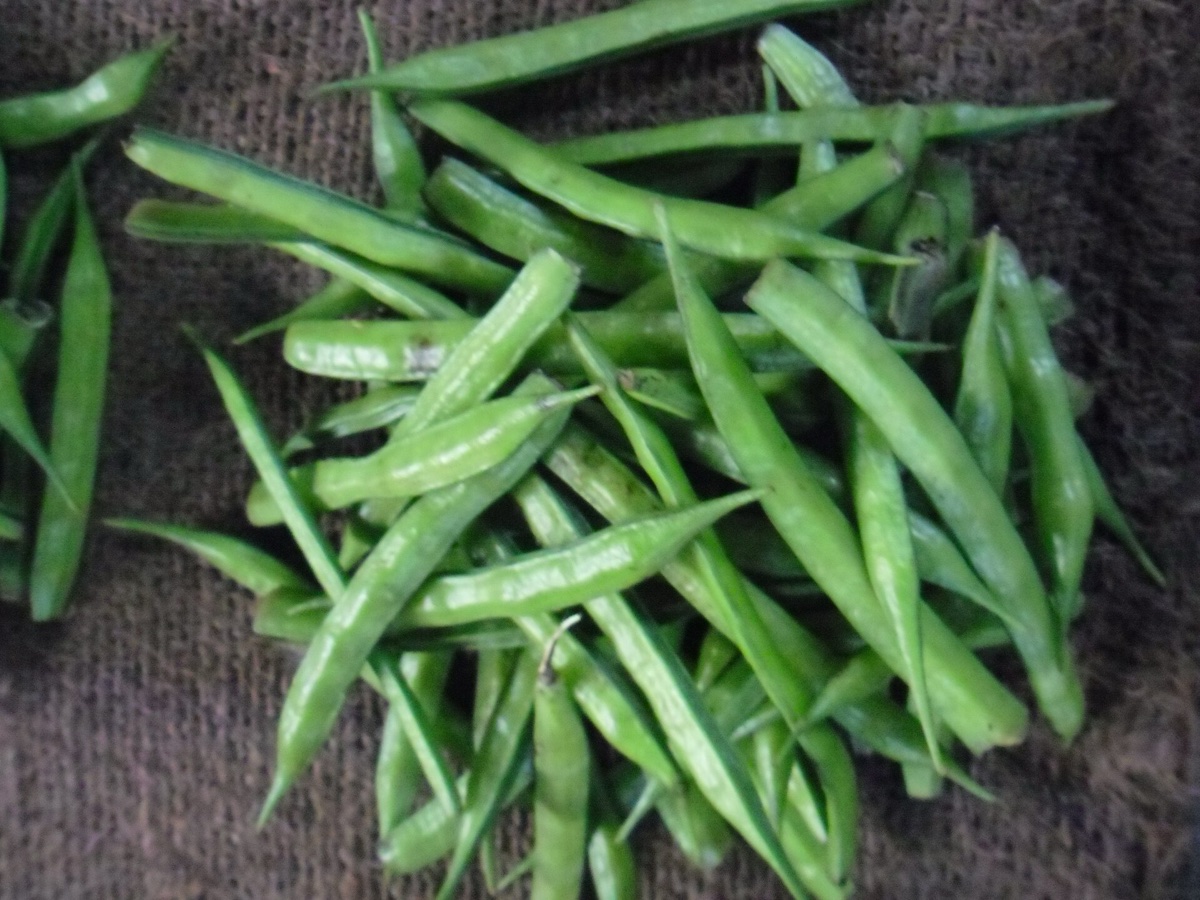
India shipped 453,612 tonnes of guar gum worth $568.9 million in FY2024-25 — the largest export volume in five years (APEDA). Almost the entire trade runs on one supply chain: guar grown across western Rajasthan, milled into splits and powder, and shipped to buyers in Houston, Hamburg and beyond. The guar gum export data behind that headline is unusually easy to read, because the product has two customers that behave nothing alike. About 90% of exports feed oil and gas extraction — guar gel is what frack crews pump downhole — while food manufacturers buy the rest as stabiliser E412 (APEDA). When American rigs drill, Rajasthan sells.
That concentration cuts both ways. A guar exporter's order book tracks the US rig count more closely than any mandi board, and the exporters growing fastest are the ones who can see which importers are actually receiving guar gum right now — grade, tonnage, month — instead of waiting for an agent in Ahmedabad to call. Here is what the numbers say, and how to work them.
The 30-second version
- India exported 453,612 MT of guar gum worth $568.9 million in FY2024-25 — a five-year volume high (APEDA).
- Top buyers: USA, Germany, Russia, Norway and China; the US alone takes 41.2% of world guar gum imports (Industry Today).
- Roughly 90% of export demand is oilfield-grade for hydraulic fracturing; food-grade E412 is the steady second engine.
- Rajasthan grows about 72% of India's guar, and India supplies 70–80% of world output (APEDA, Mordor Intelligence).
- Guar gum ships under HS 130232; India's main 8-digit line is 13023230 (treated and pulverised).
What does guar gum export data show for 2026?
Volumes are at a five-year high but value still trails the FY2022-23 peak: India moved 453,612 MT for $568.9 million in FY2024-25, against 406,531 MT for $617 million two years earlier — more tonnes, less money (APEDA/DGCIS series).
Do the division and the squeeze is obvious. Average export realisation fell from about $1,518 per tonne in FY2022-23 to roughly $1,254 per tonne in FY2024-25. Buyers restocked hard once prices softened; sellers shipped volume to hold turnover. The five-year series also shows how violent this trade's cycles are — exports collapsed to 235,000 MT ($263 million) in pandemic-hit FY2020-21, then rebuilt every year since. The single biggest driver across the whole period, per the same analysis, is crude oil: guar demand rises and falls with drilling economics, not food trends.
FY2022-23 earned $617 million on 406,531 tonnes. FY2024-25 moved 47,000 tonnes more and earned $48 million less. That gap is the entire price story in one line.
Who buys the most guar gum from India?
The United States is the largest buyer of Indian guar gum, followed by Germany, Russia, Norway and China — APEDA's official list of major destinations for FY2024-25. Each lane has its own character:
- United States — oilfield-grade powder for hydraulic fracturing; 41.2% of worldwide guar gum imports (Industry Today).
- Germany — food and pharma processing hub; imports splits and powder, refines, re-sells across the EU.
- Russia — drilling-fluid demand from its own oilfield services sector.
- Norway — offshore North Sea operations pull specialised drilling grades.
- China — food processing plus industrial thickeners; also a price-sensitive swing buyer.
The split matters commercially because the two demand streams vet suppliers differently. An oilfield buyer in Texas cares about fast hydration and viscosity yield per pound. A German food-grade buyer opens the conversation with E412 compliance paperwork, mesh size and residual protein. Same plant, two different sales scripts.
Fracking pulls the volume, food grade sets the floor
Oil and gas applications made up 37.62% of the guar gum market in 2025 and food and beverage another 32.74%, inside a market worth $1.10 billion in 2025 and forecast to reach $1.82 billion by 2032 at a 7.4% CAGR (Industry Today). Guar's job downhole is simple: it thickens frac water cheaply, hydrates fast and biodegrades, which is why US oilfield chemical firms build entire product lines around it (PfP Industries).
America has tried to grow its way out of dependence — Texas guar acreage expanded from about 7,000 to 50,000 acres since 1999 — yet US output ran only 4,600 to 14,000 tonnes a year during 2019-2024 (Industry Today). Against India's 453,612-tonne export year, that is a rounding error. Practitioners in the guar belt read this fluently: mills around Jodhpur and Bikaner watch the weekly US rig count the way equity traders watch the Fed, adding shifts when frack fleets mobilise and leaning on food-grade orders when they idle.
The food side is the quieter engine. Guar gum is additive E412 — the thickener holding texture in ice cream, gluten-free bakery, sauces and pet food (Food Additives). Food-grade consumption stayed steady through every quarter of 2025 even as oilfield demand whipsawed (ChemAnalyst). It is lower-volume, higher-spec business, and it is what keeps a mill alive in a downcycle.
Which HS code covers guar gum?
Guar gum ships under HS 130232 — mucilages and thickeners derived from locust beans or guar seeds. India's 8-digit ITC-HS schedule splits the trade into the two commercial forms:
| HS code | Covers | Typical product |
|---|---|---|
| 130232 | International 6-digit heading | All guar-derived mucilages and thickeners |
| 13023220 | Guar gum refined split (EximGuru) | Refined splits — the intermediate processors buy |
| 13023230 | Guar gum treated and pulverised (Cybex) | Powder — the main export line, food and oilfield grades |
Search guar gum export data with the 6-digit code and you catch everything; query only 13023230 and you miss the splits trade that feeds overseas grinders. If the code system is new to you, start with our guide to what an HS code is and how to use it.
Rajasthan grows it, a handful of towns mill it
Rajasthan produces about 72% of India's guar, and India in turn supplied 70–80% of global output in 2024 (APEDA, Mordor Intelligence). Guar is a hardy, rain-fed kharif crop, so every weak monsoon over Bikaner, Churu and Jodhpur districts tightens seed supply months before buyers in Houston feel it. Around 90% of the gum India processes is exported (APEDA) — domestic consumption barely registers. Nearly every serious guar gum exporter in India operates within a day's drive of the crop, milling seed into splits, then powder, and selling the leftover meal as cattle feed to squeeze margin from the husk.
Guar gum prices in 2026
As of March 2026, guar gum runs about $1,520/MT landed in the USA, $1,405/MT in China and $1,810/MT in Spain (ChemAnalyst). The recent direction is soft: Q4 2025 saw North American prices fall 6.6%, Asia-Pacific drop 5.94% and Europe ease 1.14% as hydraulic-fracturing activity slowed, after a modest Q3 uptick. Food-grade demand held steady throughout — the floor under the market, again.
Guar is the rare farm commodity priced off an oil chart. Rig counts up, Jodhpur mills add shifts. Rig counts down, food-grade buyers set the price.
How ShipScout turns guar gum export data into a buyer list
ShipScout is a global trade-intelligence platform — 11 billion-plus shipment records across 240+ countries, built as an affordable alternative to Panjiva and ImportGenius. It helps guar exporters find and vet buyers with data-backed targeting, working from mirrored licensed trade data for India-linked trade. The guar workflow:
- Search HS 130232 in US import records. American customs data is public, so every importer receiving guar gum is named shipment by shipment — here's how to work US import data, starting from the US company directory.
- Rank buyers by volume and cadence. A Texas importer clearing containers monthly outranks ten one-off buyers. Sort by tonnage in the company directory and work the top.
- Split oilfield from food-grade targets. Shipment descriptions carry the tell — "fast hydration", mesh counts and viscosity specs mean fracking; "food grade" and E412 mean the other pitch.
- Vet before you ship. Check a buyer's real import history before extending credit — how to verify an international partner before paying — and use the broader playbook in using customs data to find buyers.
One habit that converts: pull a target importer's last two quarters of guar receipts and open your first email with the specifics — grade, tonnage, origin they currently buy from. Replies change when a buyer realises you can see their purchasing. India's guar gum export data already names your next customer. Start a free trial and search HS 130232 to meet them.
See who’s importing guar gum buyers right now.
ShipScout turns 11B+ shipment records across 240+ countries into a live list of verified buyers and suppliers — ranked by volume, with the contacts to reach them. Create a free account and run your first search in minutes.
Start your free trial →