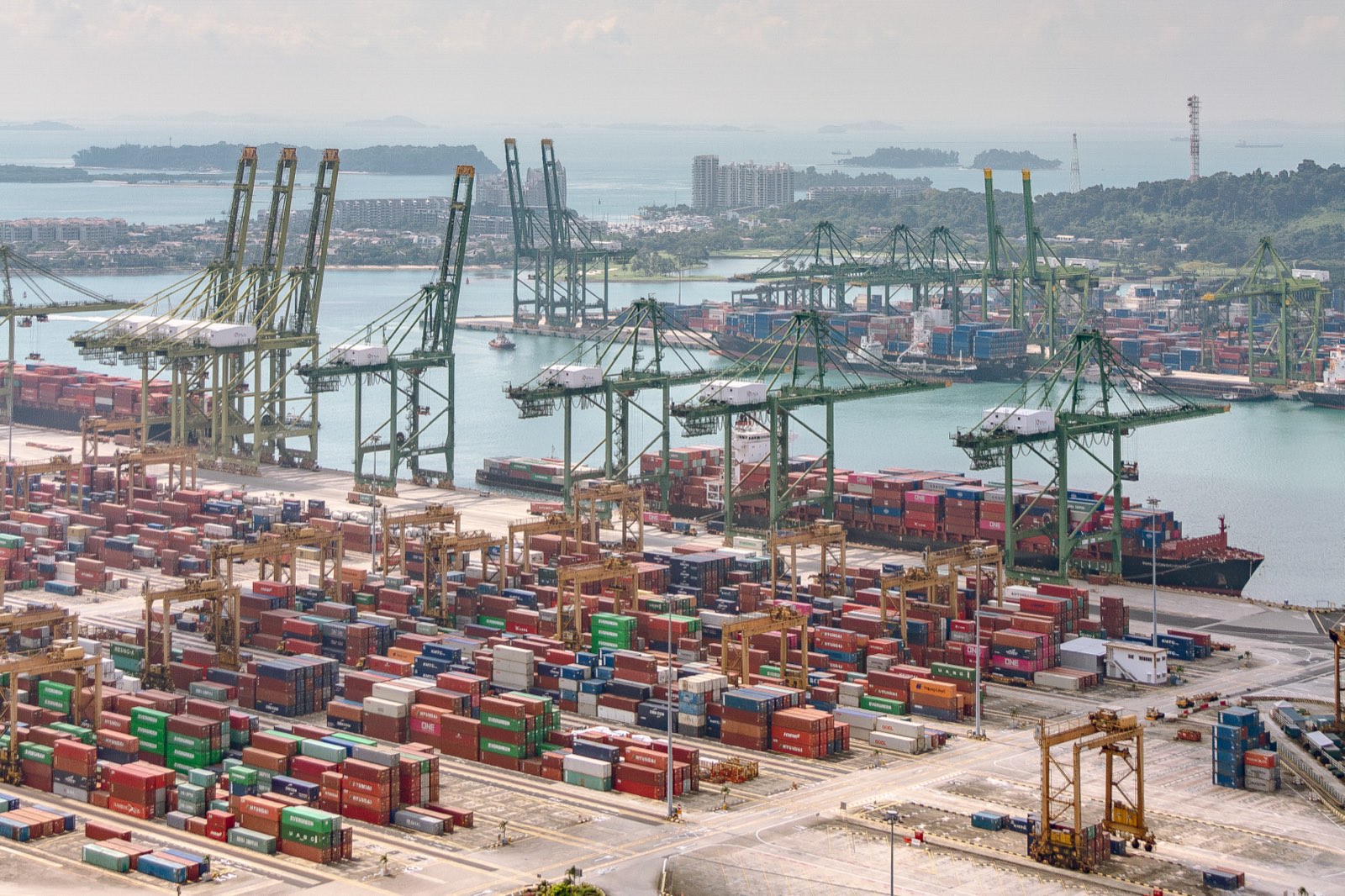
Roughly 80% of world trade now moves on open account — the single riskiest way an exporter can get paid, where you ship first and wait 30, 60 or 90 days for the money. That benchmark, published by the banking industry's Wolfsberg Group and matched by WTO data showing 80–90% of world trade rides on trade credit, tells you the whole game: buyers hold the leverage, and the exporters who win know exactly when to trade safety for the sale.
The five main export payment methods sit on a risk ladder that the U.S. Commerce Department's trade.gov lays out bluntly — from cash-in-advance, where you carry zero risk, down to consignment, where you carry it all. Pick wrong and you either lose the order to a competitor with softer terms, or ship goods you never get paid for. This guide ranks all five and shows when to use which.
The 30-second version
- Five export payment methods, ranked safest-to-riskiest for the exporter: cash-in-advance → letter of credit → documentary collection → open account → consignment — the core methods of payment in international trade.
- Risk is a see-saw: whatever is safest for you is hardest for the buyer to accept. About 80% of world trade runs on open account because buyers demand it.
- The letter of credit vs advance payment call is the classic middle ground — an LC swaps the buyer's promise for a bank's when you can't verify a new buyer.
- Letters of credit now settle only ~13% of world trade; US commercial LCs outstanding have fallen from $37B (1995) to about $15B (2025) as open account took over.
- The lever that lets you offer safer terms and still win: verify the buyer's real shipment history first, then match export payment terms to proven behaviour.
What are the export payment methods, ranked by risk to the exporter?
The five export payment methods, from safest to riskiest for the seller, are cash-in-advance, letter of credit, documentary collection, open account, and consignment. Security for the exporter falls as convenience for the buyer rises — every step down the ladder shifts risk from the importer onto you.
An exporter's fear: any sale is a gift until payment is received. The importer's mirror fear: any payment is a donation until the goods are received. — U.S. Commerce Department, trade.gov
| Payment method | Risk to exporter | Risk to importer | When to use it |
|---|---|---|---|
| Cash-in-advance (wire, escrow) | None | Highest | New or unverified buyer, custom goods, high-risk market |
| Letter of credit | Low | Low–medium | Large order, buyer you can't credit-check, shaky market |
| Documentary collection (D/P & D/A) | Medium | Low | Established relationship, stable market, want lower fees than an LC |
| Open account (30/60/90 days) | High | None | Trusted repeat buyer, competitive market, ideally credit-insured |
| Consignment / escrow | Highest | None | Trusted distributor holding your stock abroad; escrow to de-risk a first deal |
Cash-in-advance: safest for you, hardest to sell
Cash-in-advance means the buyer pays before you ship — wire transfer, credit card, or funds held in escrow. You carry zero credit risk. It's the exporter's dream and the importer's nightmare, because now they front the money and trust you to deliver. trade.gov's warning is direct: exporters "who insist on this payment method as their sole manner of doing business may lose to competitors who offer more attractive payment terms." Reserve it for first orders with unverified buyers, custom-made goods, or genuinely risky markets.
Letter of credit vs advance payment: the banked middle ground
When a buyer won't pay in advance and you can't yet trust them, the letter of credit vs advance payment choice usually lands on the LC. A letter of credit swaps the buyer's promise for its bank's: the bank pays you against compliant documents no matter what the buyer does. trade.gov calls it "one of the most secure instruments available to international traders," and the right tool "when reliable credit information about a foreign buyer is difficult to obtain."
The catch is paperwork, not default. Between 60–75% of document sets are rejected on first presentation — usually a typo or a late shipment, not a real dispute — so payment stalls while you fix and re-present, per discrepancy-rate analysis. LCs are also getting rarer: they settle roughly 13% of world trade today — about $2.3 trillion over SWIFT, per Federal Reserve research — and US banks' commercial LCs outstanding have slid from a $37B peak in 1995 to about $15B in 2025, per the Fed's 2026 FEDS Note. Full mechanics in our letter of credit guide.
Documentary collection: D/P vs D/A
A documentary collection sits one rung riskier than an LC and much cheaper. Your bank forwards the shipping documents to the buyer's bank and collects payment — but no bank guarantees anything. Two flavours decide how much risk you keep:
- D/P (documents against payment): the buyer's bank releases the bill of lading only when the buyer pays. Lower risk — you keep control of the goods until money moves.
- D/A (documents against acceptance): the bank releases documents when the buyer accepts a time draft (a written promise to pay in 30–90 days). Riskier — the buyer walks off with your goods on a promise.
trade.gov is blunt that collections "offer no verification process and limited recourse in the event of non-payment." Whoever holds the bill of lading controls the cargo, which is exactly why D/P beats D/A when you're unsure of a buyer.
Why does 80% of trade use open account — the riskiest method?
Open account means you ship, deliver, and invoice, then wait 30, 60, or 90 days for payment. It is the highest-risk option for an exporter, and about 80% of world trade uses it anyway for one reason: buyers demand it and competitors grant it. As traditional bank-guaranteed trade shrinks, open account has swallowed the difference — trade-finance claims as a share of US goods exports peaked near 24% in 2013–14 and fell to about 7% by 2025.
Open account doesn't have to be reckless. Exporters de-risk it with export credit insurance, factoring, or a standby LC as a backstop — and, above all, by extending terms only to buyers whose payment behaviour they've verified. The global trade-finance gap hit $2.5 trillion in 2025, per the ADB survey, so a buyer pushing for 90 days may simply have nowhere else to get credit — a flag worth reading.
Consignment and escrow: the two extremes
Consignment pushes open account further: you ship goods to a foreign distributor and get paid only after they sell. You own inventory sitting in someone else's warehouse across a border. trade.gov calls it "very risky as the exporter is not guaranteed any payment" — reserve it for a distributor you trust, backed by insurance. Escrow runs the opposite way: a neutral third party holds the buyer's money and releases it on proof of shipment, letting two strangers close a first deal without either one fronting the risk.
How to choose export payment methods: new buyer vs trusted buyer
The rule working exporters use: start high on the risk ladder with a new buyer, then climb down as trust builds. Match the export payment terms to what you actually know about the counterparty, not to what the buyer asks for.
- Brand-new, unverifiable buyer: cash-in-advance or a confirmed letter of credit. No exceptions on a first order.
- Some history, decent market: unconfirmed LC or a D/P collection — cheaper, still document-controlled.
- Proven repeat buyer, stable country: open account on 30–60 days, ideally credit-insured, to stay competitive.
- Long-term partner or your own distributor: extended open account or consignment.
The mistake is treating payment terms as fixed. They're a negotiation lever: offering better export payment terms than a rival can win the order outright — provided you've done the homework to know whether the risk is real.
Payment terms aren't a policy you set once. They're priced per buyer — and the exporter who can read a buyer's real risk offers softer terms and wins more deals.
How ShipScout helps you offer safer terms
Every step down the risk ladder is a bet on the buyer. ShipScout lets you check the buyer first:
- Verify the buyer is real and active across 11B+ shipment records in 240+ countries. A prospect's shipment history shows whether they genuinely import your product, how often, and at what scale — the counterparty check that decides whether open account is safe or suicidal.
- Match terms to proven behaviour. A buyer importing your goods steadily for three years may earn open-account terms; an unknown name gets a confirmed LC. Use customs and shipment data to grade each account, starting from the company directory.
- Spot the fraud patterns. Buyers who push hard for open account on a first order, or whose details match no trade record, are the classic setup in our export scam guide — and cross-checking the quoted incoterm against the route matters too, per Incoterms 2020.
Safer terms win deals only when the risk read is right. Start a free trial and check a buyer's real shipment history before you agree how — and when — they pay.
See who’s importing your product right now.
ShipScout turns 11B+ shipment records across 240+ countries into a live list of verified buyers and suppliers — ranked by volume, with the contacts to reach them. Create a free account and run your first search in minutes.
Start your free trial →