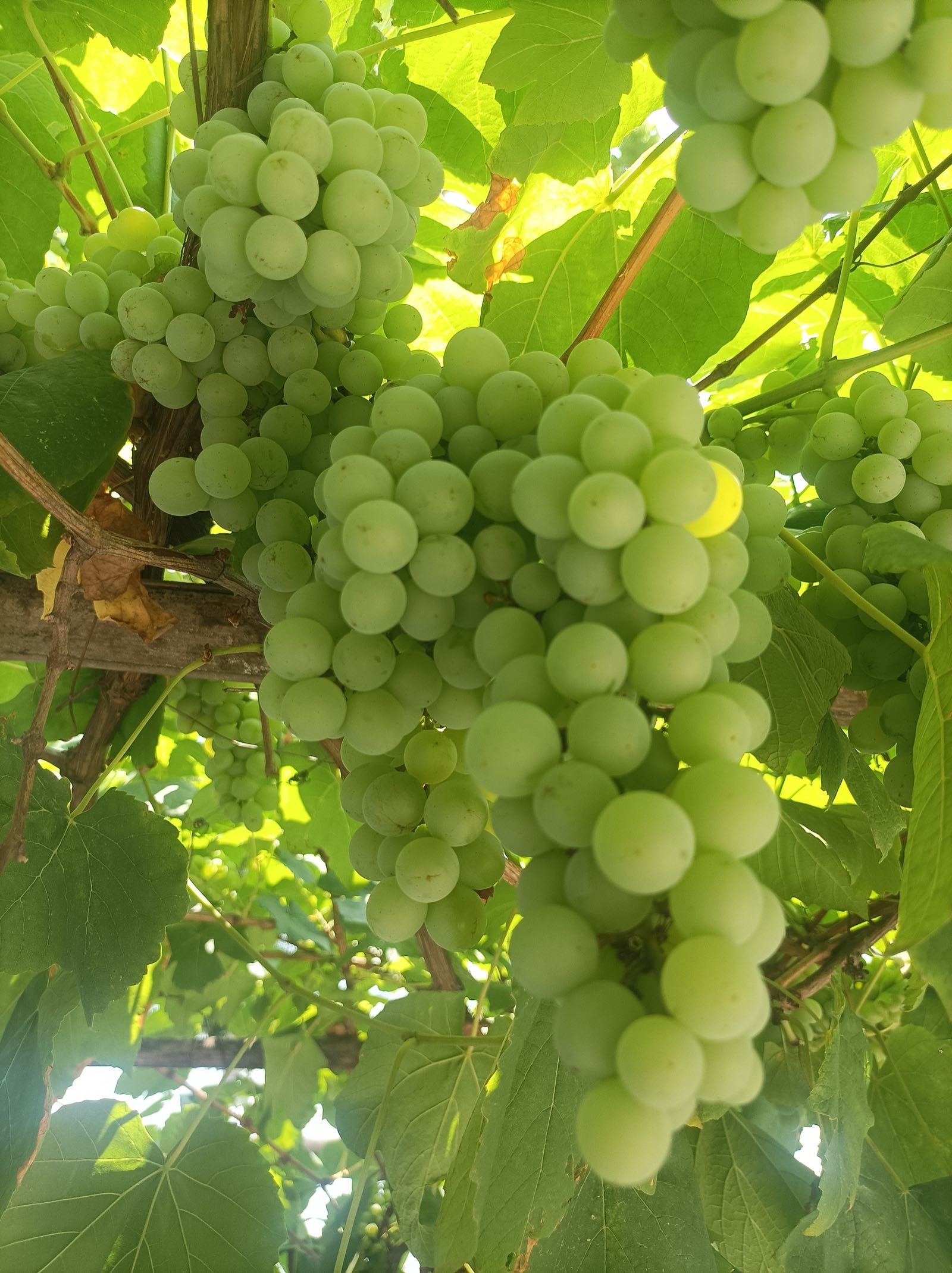
India's 2025-26 grape season opened with a stumble: shipments from Nashik, the country's grape capital, slipped 9.6% to 140,000 tonnes (1.4 lakh) from 160,000 a year earlier after rain and hailstorms cut the export-grade crop (FreshPlaza). Even so, grapes export from india cleared 271,253.89 tonnes worth USD 353.54 million in FY2024-25, and more than 40% of it moved through a single country — the Netherlands (APEDA, ICRIER).
Grape exporters who win the season don't ship to "Europe." They ship to named importers in Rotterdam, London, Dubai and Dhaka whose purchases sit in shipment records, pallet by pallet. Here are the verified 2026 numbers — volumes, values, the Thompson Seedless story and the EU compliance gate — plus how to turn them into a buyer list.
The 30-second version
- Grapes export from india was 271,253.89 tonnes worth $353.54 million in FY2024-25, down from the FY2023-24 peak of $417.07 million (343,982 MT) (APEDA).
- The Netherlands is the #1 buyer — 42% of India's grapes by value ($144.5M), ahead of Bangladesh ($32.6M), UAE ($26.4M) and the UK ($25.8M) (TE 2024, ICRIER).
- Maharashtra grows 68% of India's grapes and Nashik alone ships ~80% of exports; Thompson Seedless covers about 78% of vineyard area (ICRIER).
- The EU is the wall and the prize: GRAPENET traceability is mandatory and the chlormequat MRL sits at 0.05 mg/kg, yet over 70% of exports still go to the EU.
- Fresh grapes ship under HS code 080610 (India's line 08061000); the export window runs roughly December to April.
What does grapes export from India look like in 2026?
A high-volume, quality-gated trade concentrated in one state and one variety. FY2024-25 moved 271,253.89 tonnes of fresh grapes for USD 353.54 million — roughly $1.30 a kilo at the border (APEDA). That was a step down from FY2023-24's record $417.07 million on 343,982.34 tonnes, when a strong crop and open EU demand lined up (Tradologie). Grapes are unusual for India: the country exports about 9% of its 3.5-million-tonne crop, where mango and banana ship barely 1% — that export orientation makes it a rare farm-to-port success story (ICRIER).
Fresh table grapes move under HS code 080610 — India's eight-digit line is 08061000. Search the wrong code and your buyer list returns raisins or wine must, not table grapes. New to the system? Start with what an HS code is and how to find it. One habit separates serious Indian grape exporters from the rest: they lock the GRAPENET residue clearance and reefer slot before confirming an EU order, because in a trade with a tight December-to-April window, compliance capacity, not demand, is the binding constraint.
Which country imports the most grapes from India?
The Netherlands. It takes about 42% of India's grape exports by value — roughly $144.5 million — acting as the entry port that redistributes Indian grapes across the EU. Bangladesh is a distant second at $32.6 million, followed by the UAE ($26.4M) and the UK ($25.8M) (TE 2024, ICRIER). The top destinations by value:
| Destination | Share of India's grape exports | Value (USD million) |
|---|---|---|
| Netherlands | 42% | 144.5 |
| Bangladesh | 9% | 32.6 |
| UAE | 8% | 26.4 |
| United Kingdom | 8% | 25.8 |
Russia, Germany, Malaysia, Saudi Arabia, Nepal and Hong Kong fill out the next tier (ICRIER). The Netherlands number hides a re-export machine: Rotterdam clears the container, cold-stores it, and feeds Germany, Scandinavia and the wider EU. In the current 2025-26 season the Dutch gateway had already handled 60,153 tonnes of Indian grapes through mid-June (Mordor Intelligence).
Four markets take the bulk of India's grapes, and one — the Netherlands — takes nearly half. The importers inside each, with tonnages and arrival dates, are named in shipment records long before any agent offers an introduction.
Nashik and Thompson Seedless: where the export crop comes from
Grape export data india always points back to one district. Maharashtra grows 68% of the national crop (about 2,488 thousand tonnes), Karnataka adds 28%, and together they are 96% of production (ICRIER). Within Maharashtra, Nashik produces over 70% of the state's grapes and accounts for close to 80% of India's grape exports — the Dindori, Niphad and Satara belts are the ones that fill EU containers.
The variety story is even tighter. Thompson Seedless and its clones (Tas-A-Ganesh, Sonaka) cover about 78% of India's grape area — the green, seedless, sweet berry that EU and Gulf retailers want (ICRIER). Standard Thompson Seedless export prices run $0.90 to $1.20 a kilo FOB for EU bulk and Middle East trade (Tradologie). Newer patented varieties — ARRA, Autumn Crisp, Crimson — are creeping in because they colour better and hold up in transit, and in the wet 2025-26 season they out-yielded classic Thompson vineyards where monsoon rain cut yields 45-55% (Mordor Intelligence).
The EU compliance wall: GRAPENET, residues and MRLs
For the market that buys 70% of your crop, the barrier isn't demand — it's the residue file. Every EU-bound consignment must be registered on GRAPENET, APEDA's farm-to-port traceability platform that ties each pallet to a specific vineyard plot, records every agrochemical spray, and clears only lots whose lab-tested residues sit under the destination's Maximum Residue Limits (APEDA export procedure). Skip a step and the container doesn't sail.
The single value that has burned Indian grape exporters most is chlormequat. The EU MRL for chlormequat chloride is just 0.05 mg/kg, and Lihocin — the growth regulator Indian growers spray to set fruit buds — leaves residues above that ceiling when applied late or heavily (Down To Earth). India remains among the origins most frequently flagged in EU border-rejection notifications, which is exactly why GRAPENET's pre-harvest testing exists (EFSA 2024 residue report). The market-concentration risk is real: over 70% of grapes export from India lands in the EU, so one tightened MRL can reprice a whole season (ICRIER).
India ships 9% of its grapes when most fruits ship 1% — the whole business case is that export orientation. But nearly half of it rides on one port and one residue limit, and that concentration is the risk every grape exporter should be diversifying against.
Top destinations beyond the Netherlands
The smart move for 2026 is spreading past the Dutch gateway. Three lanes are worth the visa:
- Russia and the CIS — a large, price-driven buyer that clears volume outside the EU's MRL regime; Kazakhstan and Belarus extend the same corridor. See the Russia import-export data picture.
- UAE and the Gulf — Dubai re-exports across the Middle East and takes off-calibre fruit the EU rejects; the UAE re-export hub is the release valve when EU demand softens.
- UK, Germany and Bangladesh — the UK is a standalone buyer post-Brexit with its own paperwork, Germany is the EU's biggest end-consumer behind the Dutch port, and Bangladesh is India's largest overland grape market. The Netherlands import data shows where the re-exported fruit actually lands.
Grapes export from India: the ShipScout buyer workflow
ShipScout is a global trade-intelligence platform — 11 billion-plus shipment records across 240+ countries, built as an affordable alternative to Panjiva and ImportGenius. It helps Indian grape exporters find and vet overseas buyers with data-backed targeting, working from mirrored licensed trade data for India-linked trade, while importer-side records for the EU, UK and Russia are legally public. The grape play:
- Search HS 080610. See which importers in Rotterdam, London, Dubai, Moscow and Dhaka are receiving fresh grapes right now, and how often. Start in the company directory.
- Rank buyers inside one lane. A UAE importer clearing containers weekly outranks ten one-off buyers — sort by volume and work the top of the list.
- Vet before you ship on credit. Perishables can't absorb a default or a rejected reefer — here's how to verify an international buyer before you ship.
- Reach the decision-maker. Contact intelligence, where available, beats the generic info@ inbox; the wider method is in finding buyers for export from India, and the broader basket in food and agro export data.
Grapes export from india is a one-port, one-variety trade trying to become something wider, and the buyers who could widen it are already in the data. Start a free trial and search HS 080610 to read the list.
See who’s importing grape buyers right now.
ShipScout turns 11B+ shipment records across 240+ countries into a live list of verified buyers and suppliers — ranked by volume, with the contacts to reach them. Create a free account and run your first search in minutes.
Start your free trial →